
About Us

Meet HeLovesMath and explore ways to turn a collection of resources into a study routine.

Quick Answer

HeLovesMath provides maths explanations, worked examples, calculators, worksheets and past papers. The teaching approach uses straightforward explanations and step-by-step examples so learners can practise the method after reading it.
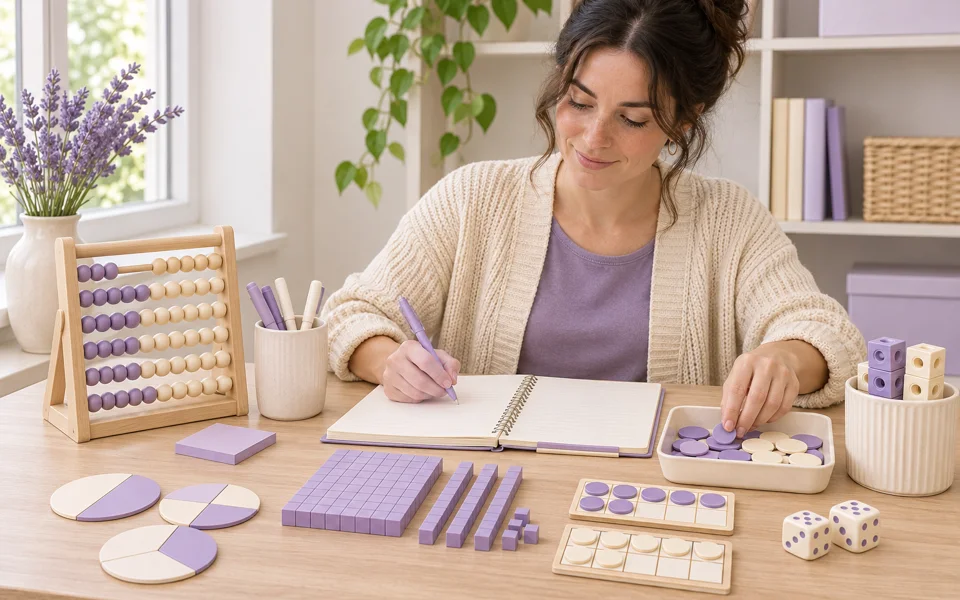
A mathematics learning workspace with notebooks and reference books

HeLovesMath.com

is a free website that includes hundreds of pages of math, explained in simple terms, with thousands of examples of worked-out problems, past papers, books, and other resources. Topics cover basic counting through Differential and Integral Calculus! Use He Loves Math to homeschool math, or as a supplement to math courses at school. The website was developed by a group of software engineers and researchers.

Our philosophy on teaching math:

  • You can’t study for math tests without doing problems! A lot of times, we think we know the subject w’r tutoring (by looking at the book), and then when we get in there and start solving problems, we realize that we didn’t know it as well as we thought we did!
  • Learning math should be an active experience and should relate to the world. And always use “simpler numbers” if a problem’s numbers are complicated. For example, paying $4 for 2 oranges makes it more obvious that you need to divide than paying $5.88 for 3 oranges.
  • Learning math requires an understanding of what to “memorize” (for example, the tools), and what to “understand”. We don’t need to reinvent the wheel; it’s already been invented. Don’t worry if you have to memorize something with math without “understanding” it!
  • Learning more advanced math is no more than building on what is already known: if you can add 2+2, and build with math tools, you can be taught to solve a complicated Calculus problem.
  • Math books tend to “brag” and try to explain things with difficult words that sometimes don’t make sense! Math can be explained more easily with every day words.
  • Sometimes there’s just one little concept that isn’t known or understood that makes a whole new math concept difficult. We need to find that and learn it!
  • Math = Rules + Examples + Practice, Practice, Practice!!!
Note: The tools I use to create the graphs and equations are => Graph Tool (free!).

Use a guide across two study sessions

After reading a worked example on equivalent fractions, close the guide and reconstruct the argument using a new denominator. Next day, try an example with a negative numerator. Comparing the two attempts shows whether you remembered the rule and can apply it when the surface features change.