Use the original number worksheets to practise place value, fractions, factors and operations.
Quick Answer
The number directory groups exercises on fractions, decimals, percentages, ratio, negative numbers and place value. Use the topic sections to find the specific skill you need before moving to mixed number practice.
Fractions, Decimals and Percentages
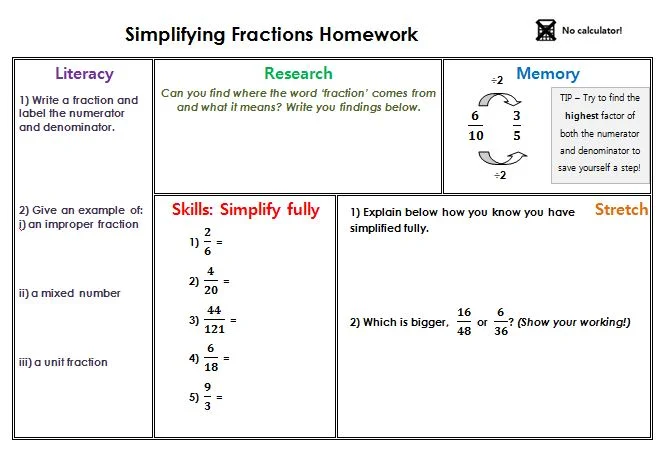
Simplifying Fractions (@MrDraperMaths)
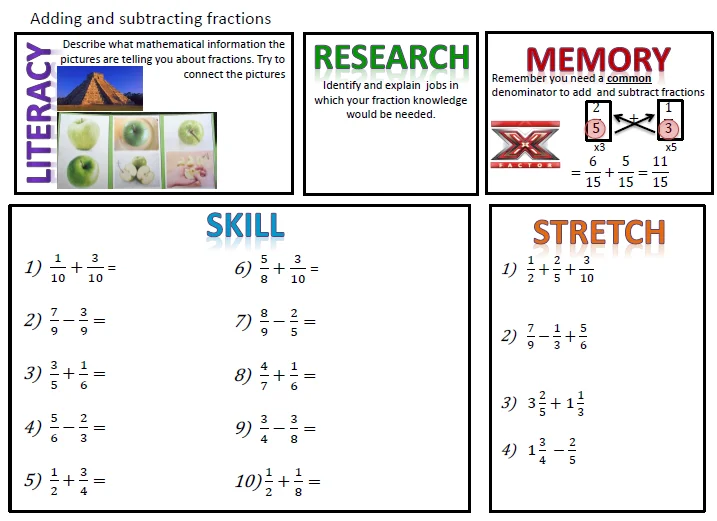
Adding Fractions (@MissBsResources)
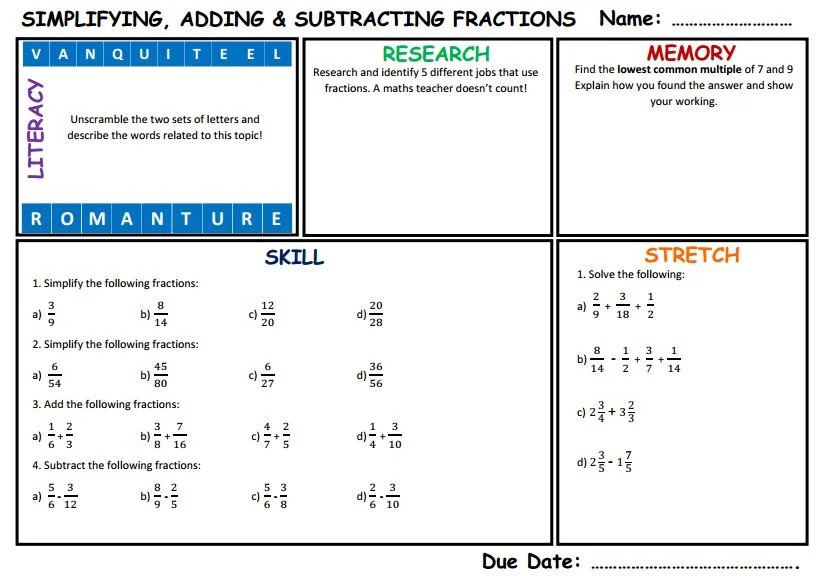
Simplifying and Adding Fractions (@AccessMaths)
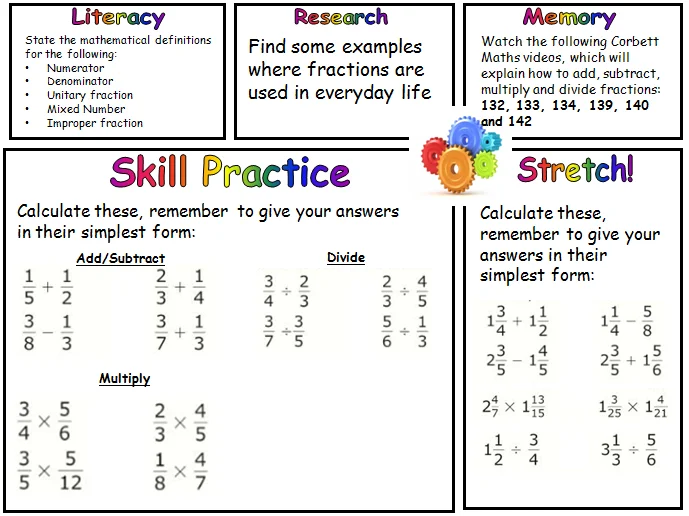
Fractions – 4 Operations (@Missgourlay)
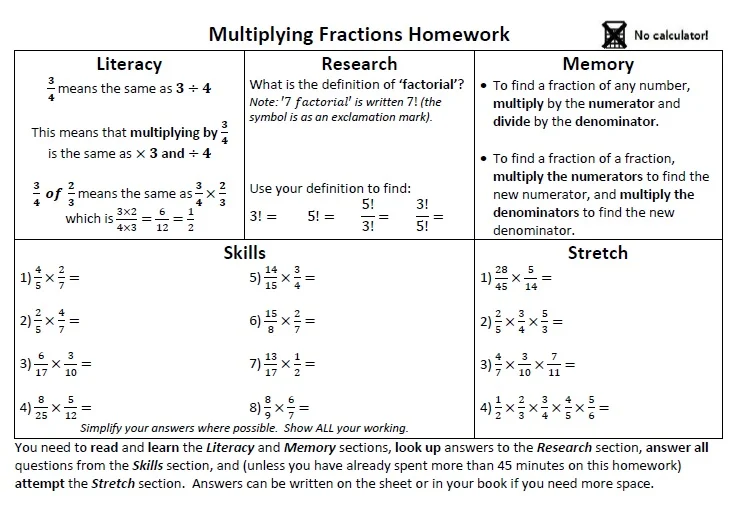
Multiplying Fractions (@the_chalkface)
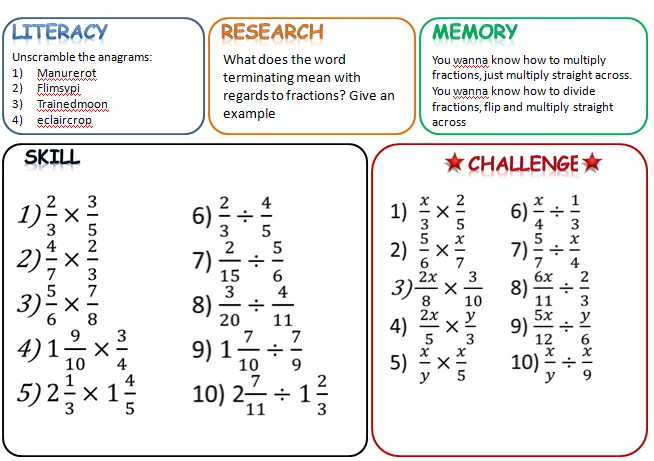
Multiplying and Dividing Fractions (Rachel Mahoney)
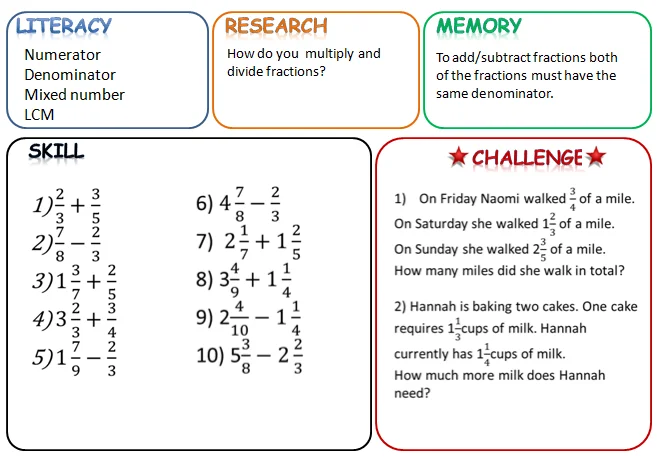
Adding Mixed Numbers (Rachel Mahoney)
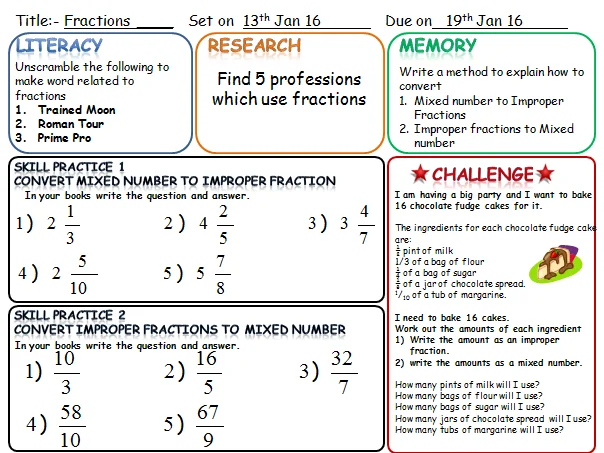
Improper Fractions (@pippashley)
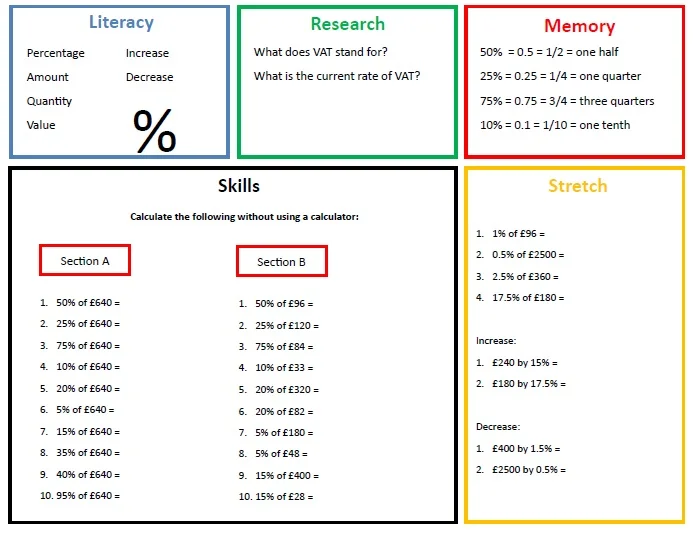
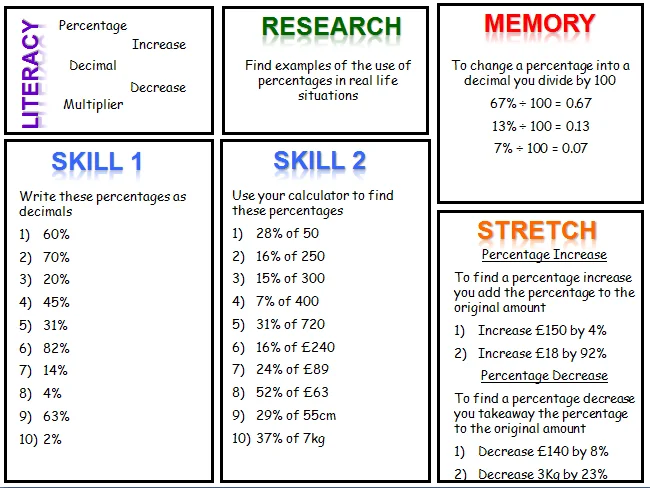
Simple Percentages (@_rhi_rhi)
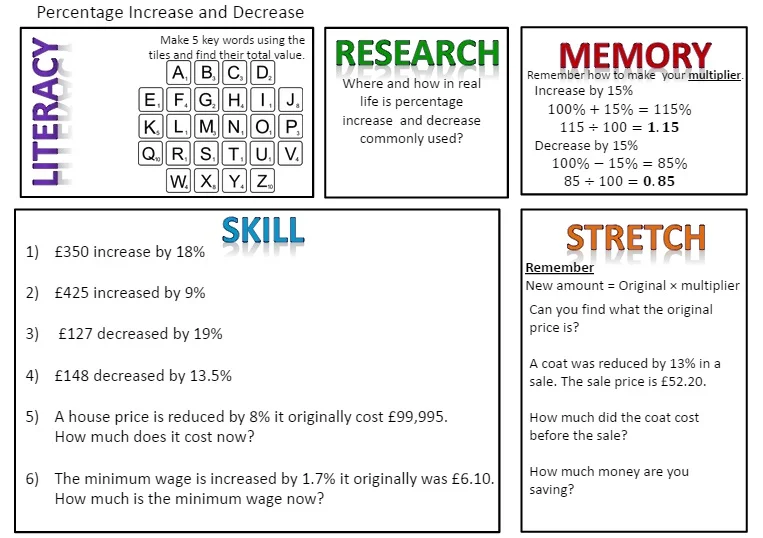
Percentage Increase (@MissBsResources)
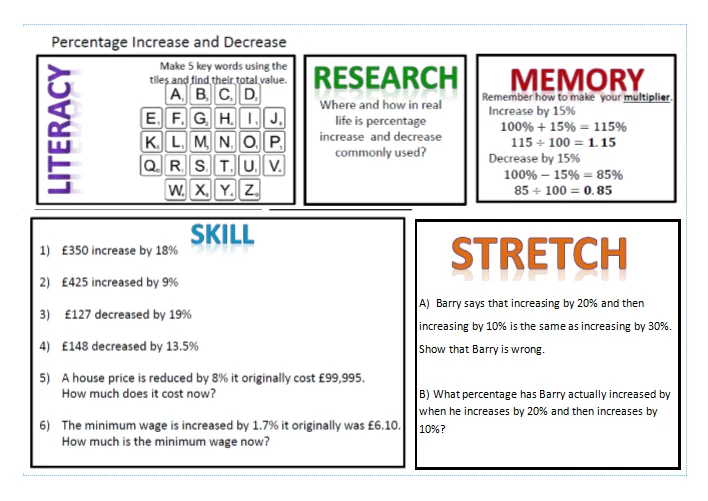
Percentage Increase (Rachel Mahoney – edited from @MissBsResources’ original)
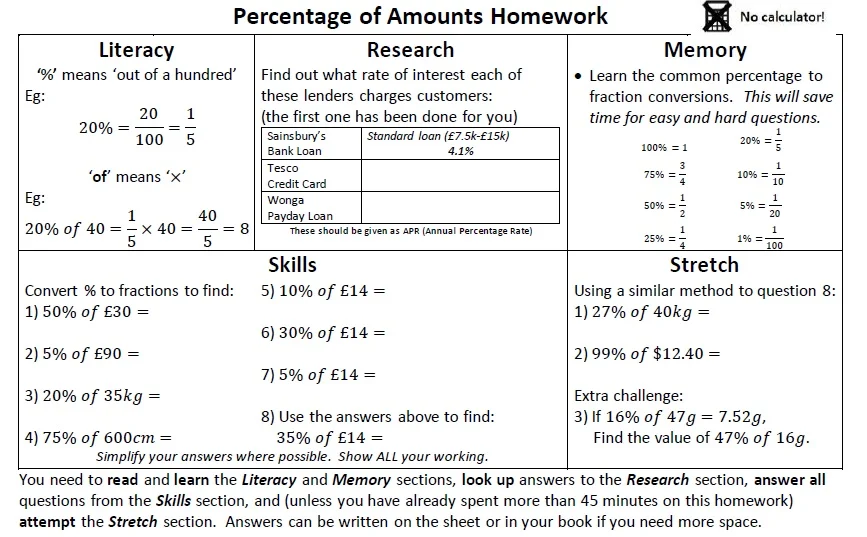
Percentage of Amounts (@the_chalkface)
Percentages of Amounts (@MissNP_)
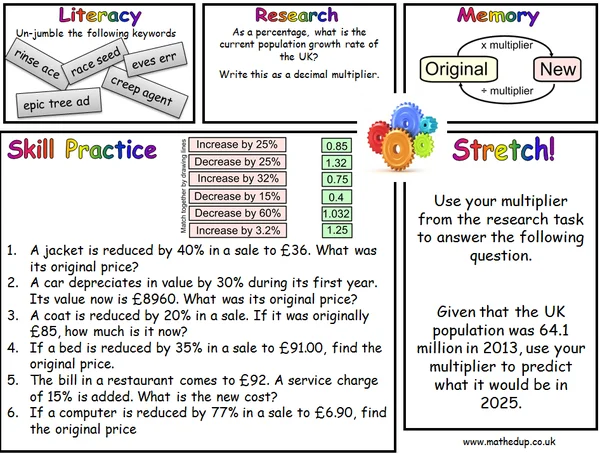
Reverse Percentages (@MathedUp)
Percentages & Interest (@missnmaths)
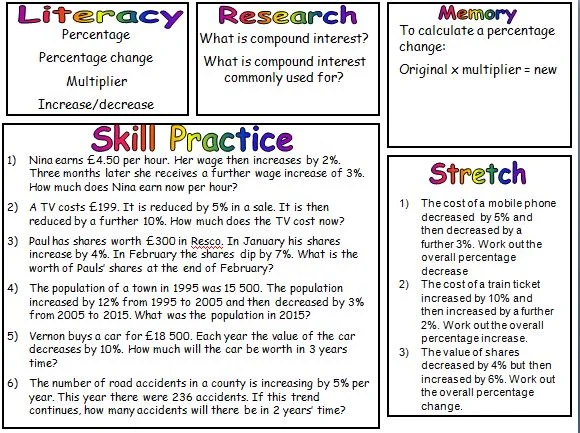
Repeated Percentage Change (Rachel Mahoney)
Decimals (@emilyhamham)
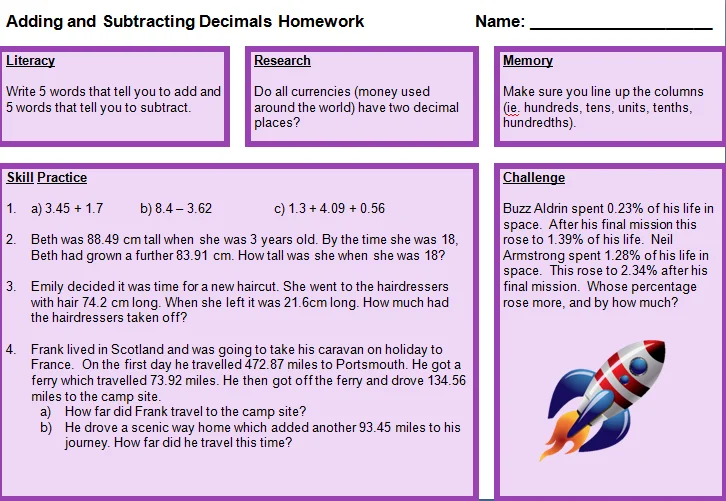
Addition and subtraction of decimals (@PixiMaths)
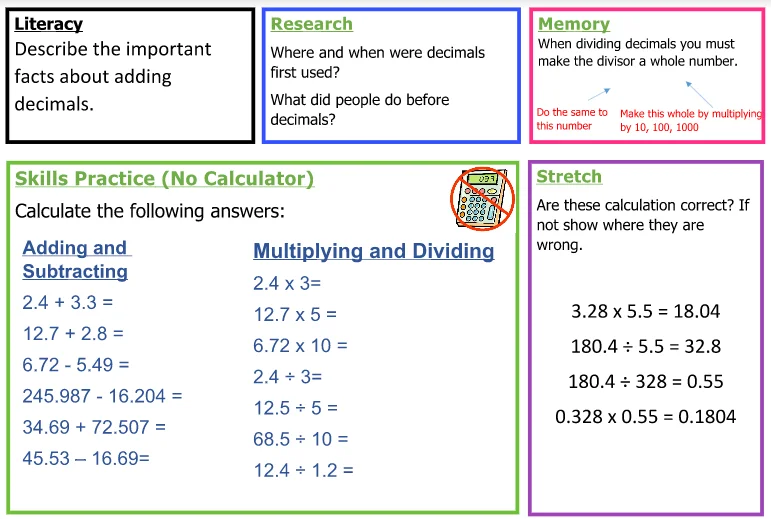
4 Operations with Decimals (Damien Medhurst)
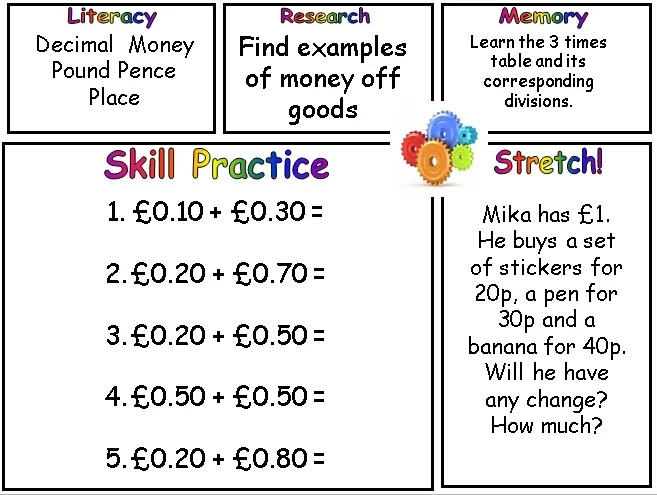
Basic decimals and money (@Mathsblackcat)
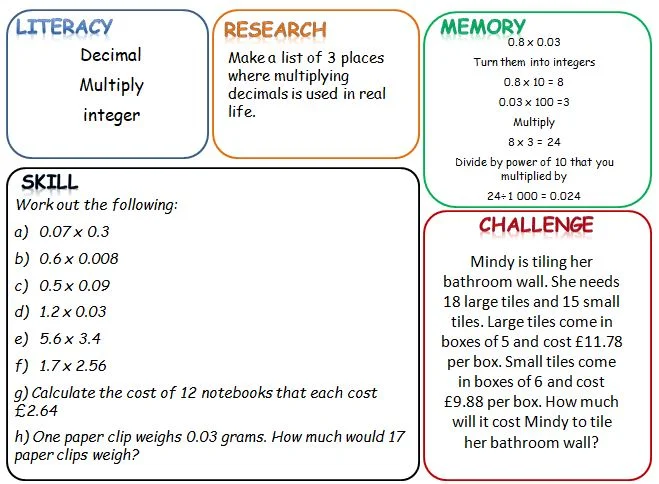
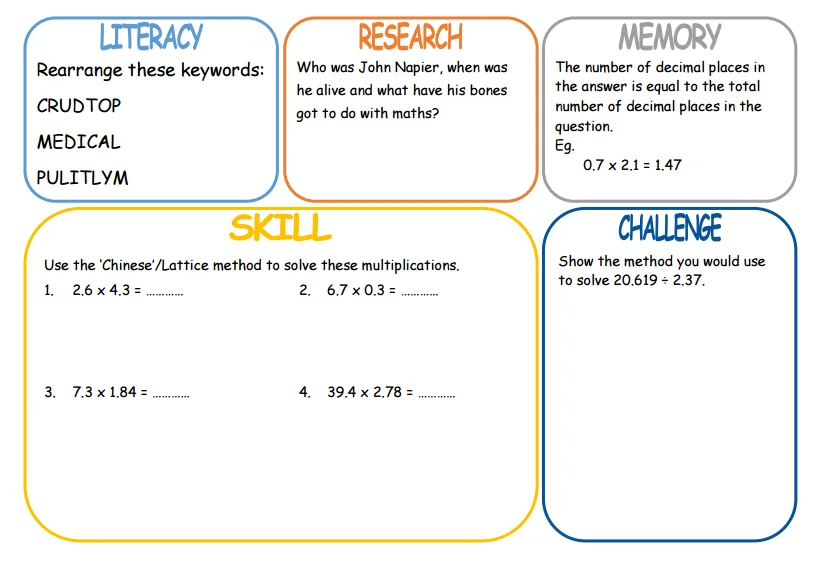
Multiplying Decimals (Rachel Mahoney)
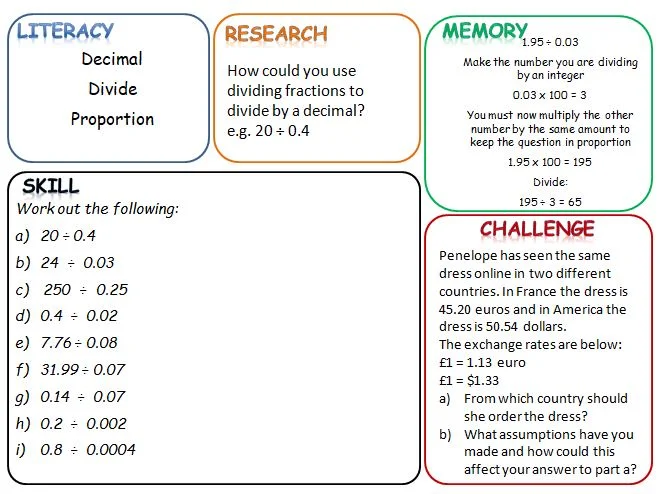
Dividing Decimals (Rachel Mahoney)
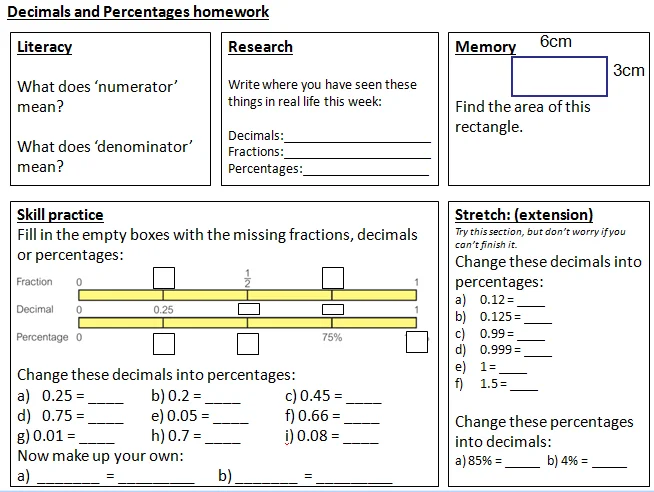
Decimals to Percentages (@mathsteague)
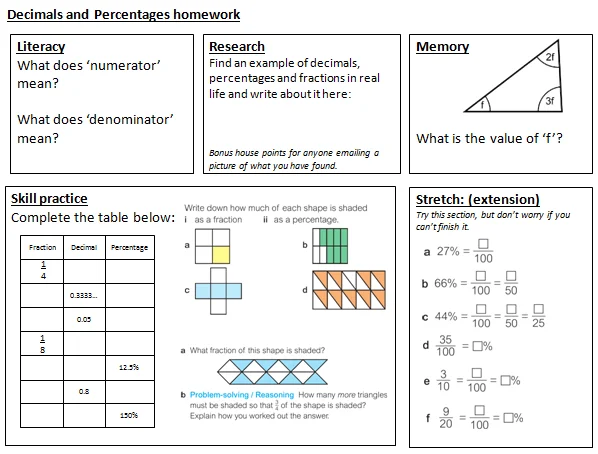
FDP (@mathsteague)
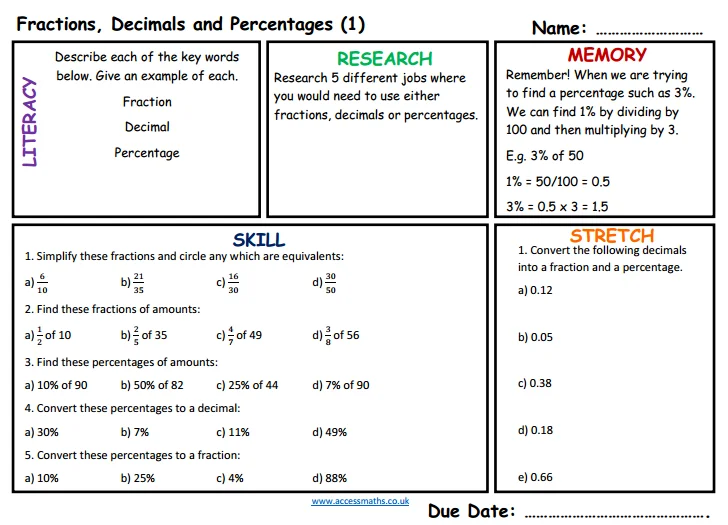
FDP (@AccessMaths)
FDP (@DIRT_expert)
Ratio and Proportion
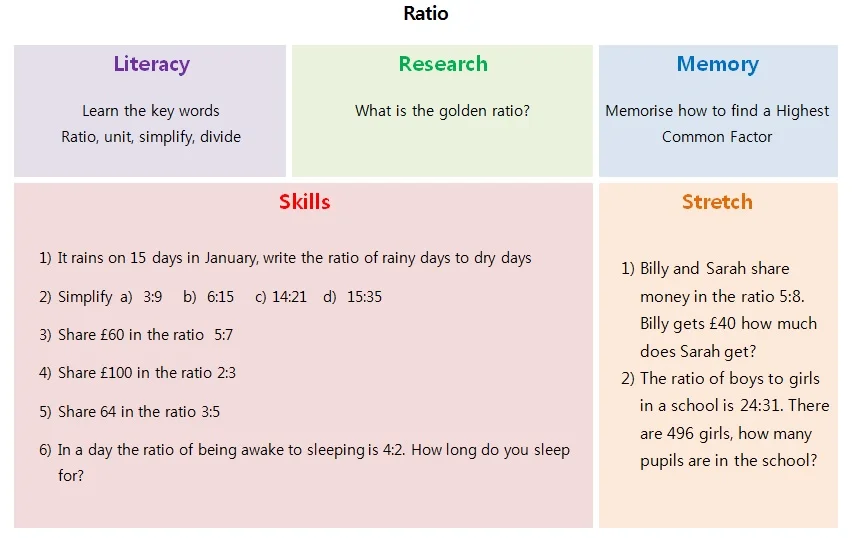
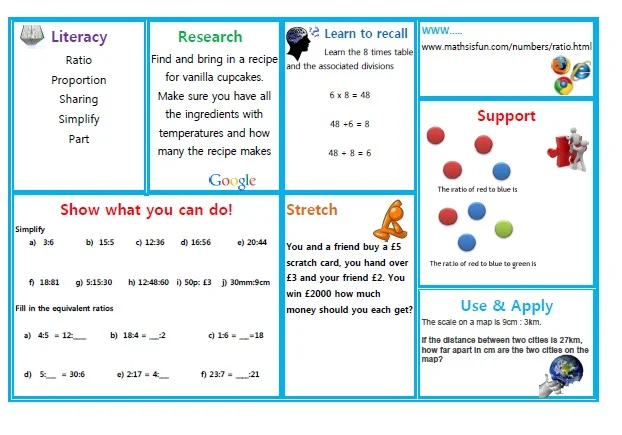
Ratio (K Marshall)
Ratio (@MathsMissC)
Ratio (@hjcurry7019)
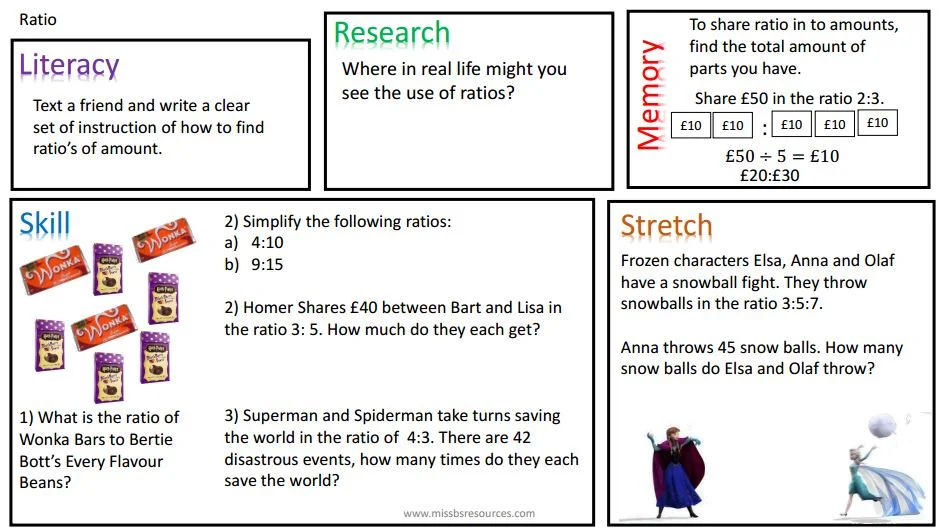
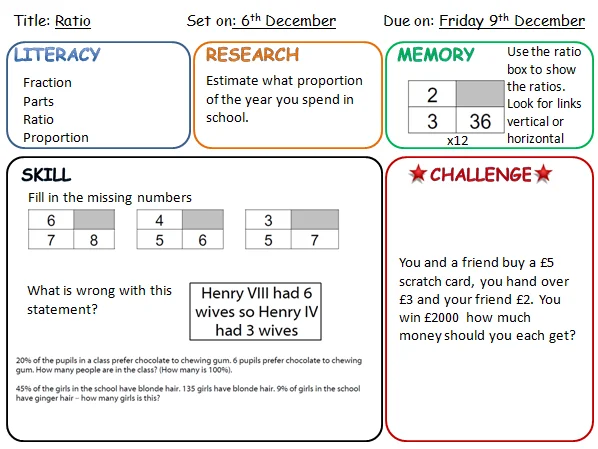
Ratio (@MissBsResources)
Ratio (@MathedUp)
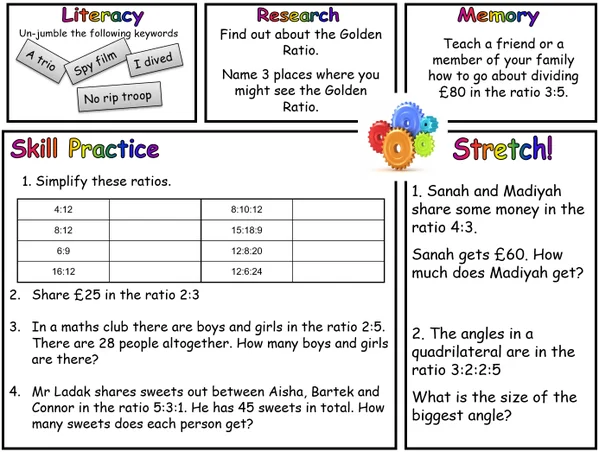
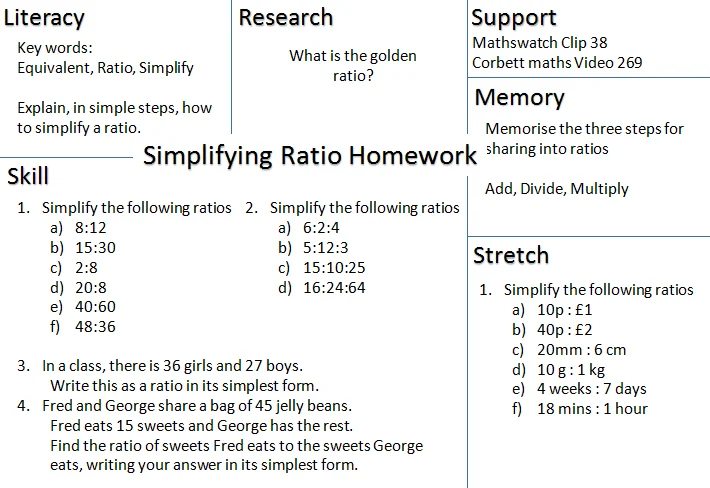
Simplifying Ratio (@DudsPln)
Ratio (Simon Pittman)
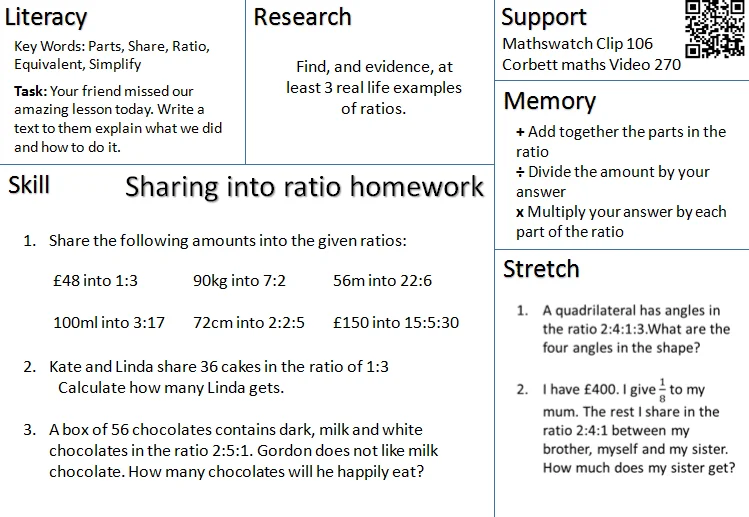
Sharing into Ratios (@DudsPln)
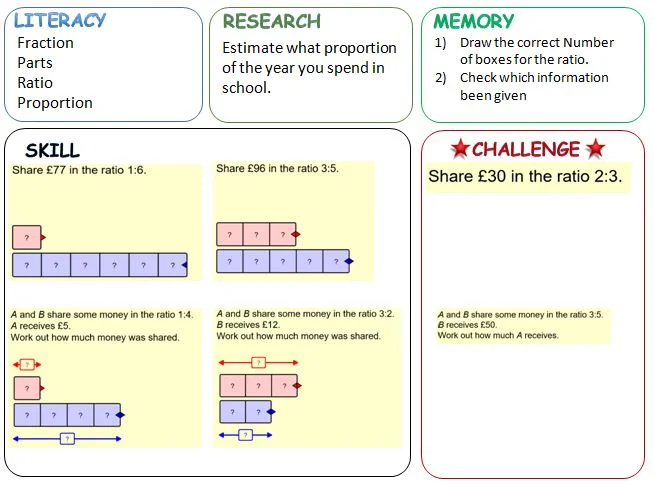
Ratio with Bar Models (Matt Soulby)
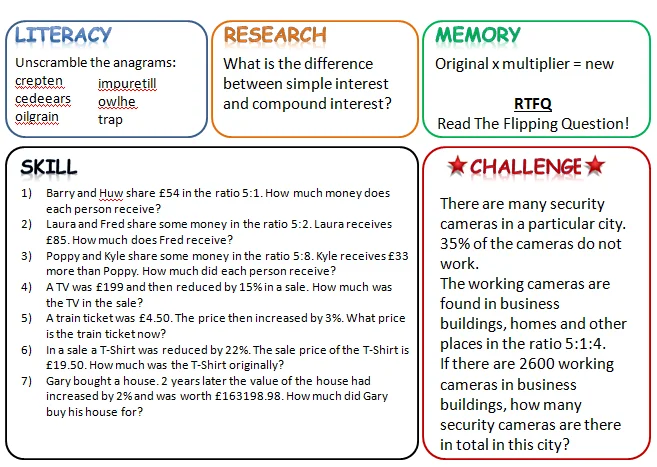
Ratio and Percentage (Rachel Mahoney)
Direct Proportion (@MrDraperMaths)
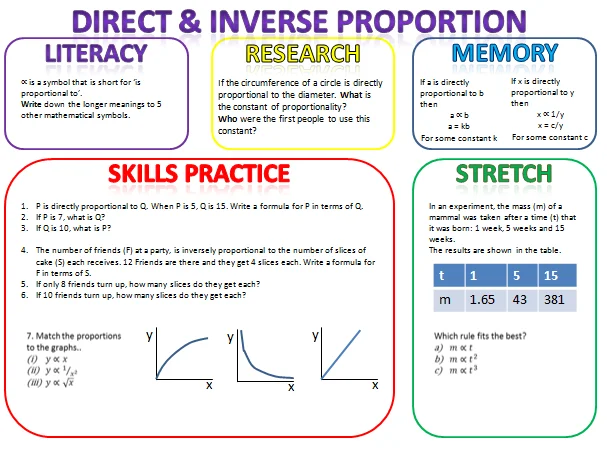
Direct & Inverse Proportion (@MrKMorrison)
Negative Numbers
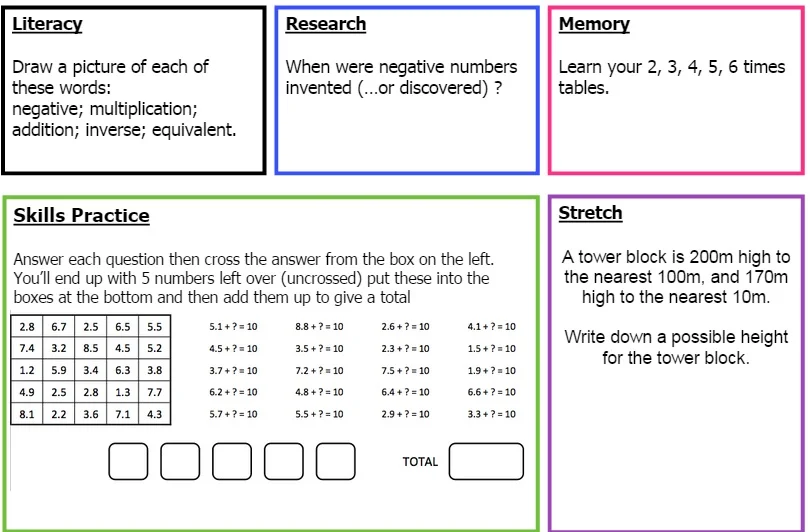
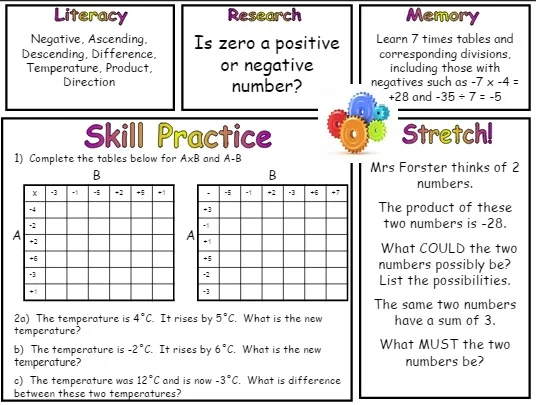
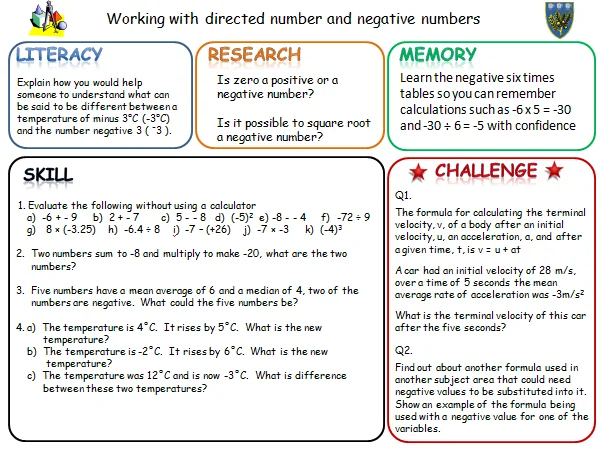
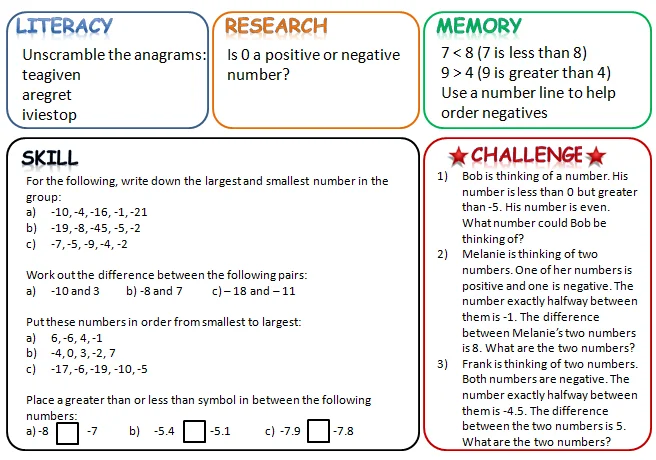
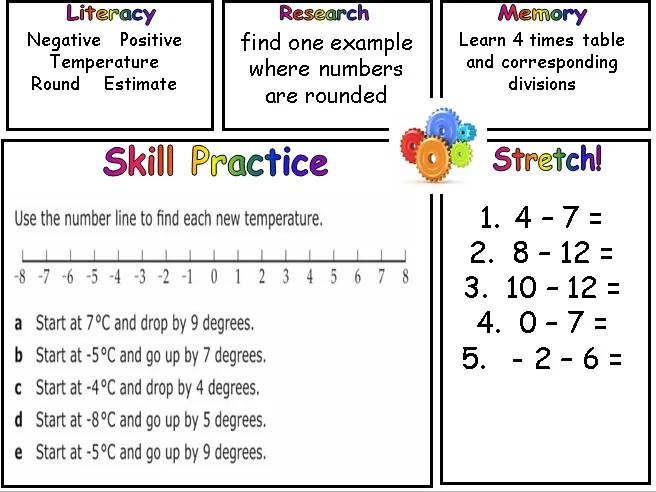
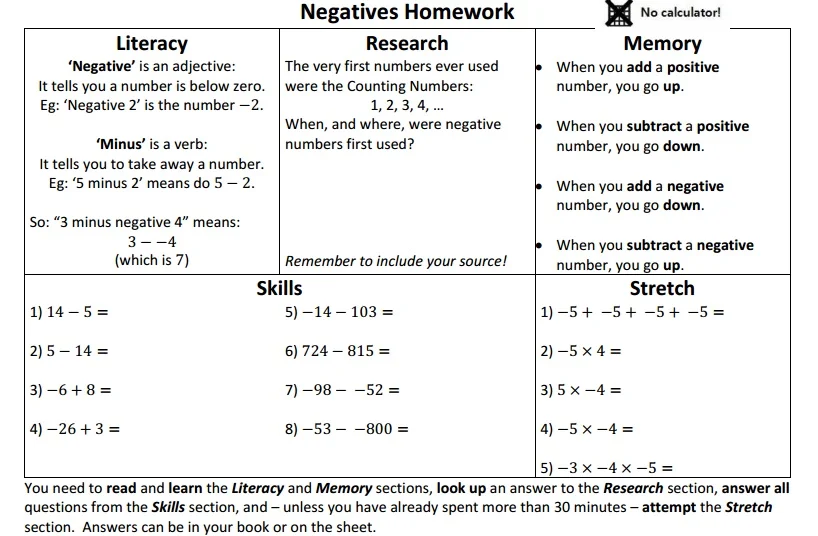
Negatives (@DIRT_expert)
Directed Numbers (@Mr3142)
Basic Negatives (Rachel Mahoney)
Basic Negatives (@Mathsblackcat)
Negatives (@the_chalkface)
Arithmetic and the Order of Operations
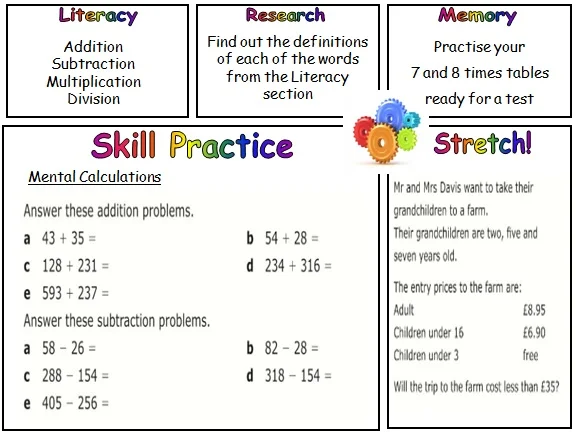
Basic Mental Calculations (Steve Neale)
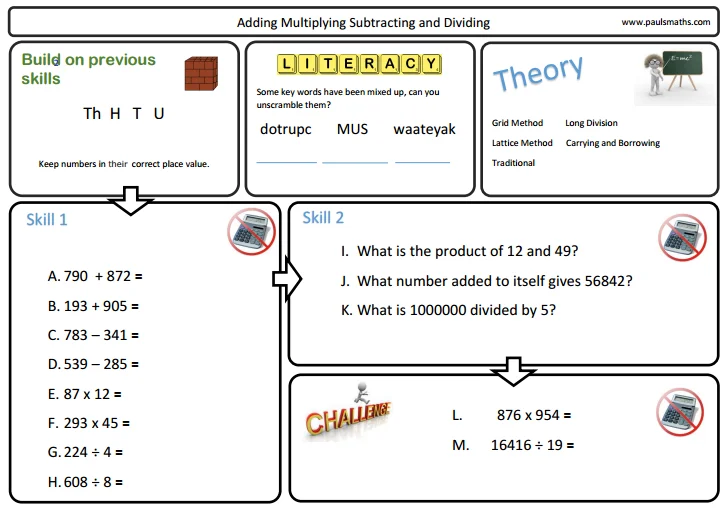
Arithmetic (@DIRT_expert)
Four Rules (@nncpsmith)
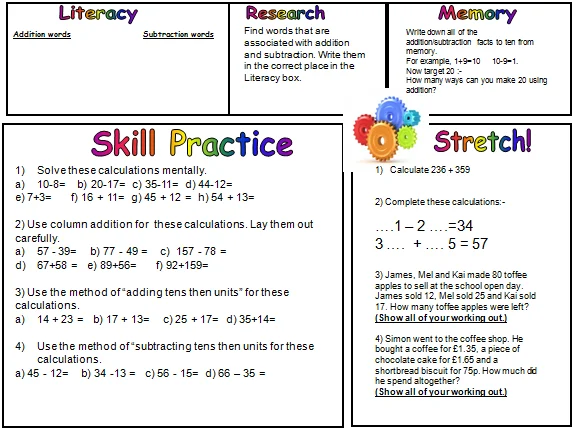
Addition and Subtraction (@Mathsblackcat)
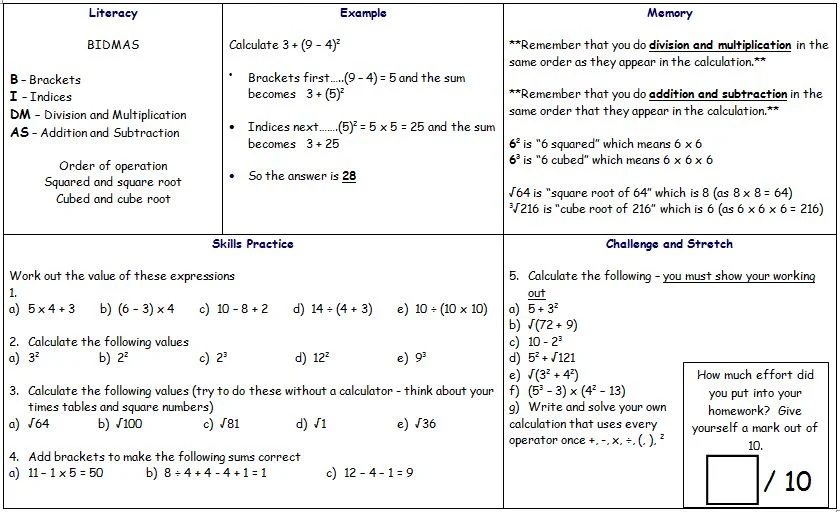
BIDMAS (@JamesW_72)
Order of Operations (@EJmaths)
Addition (@RoyBird)
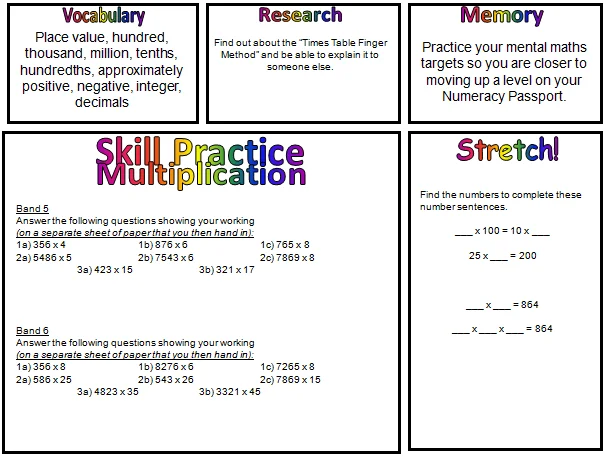
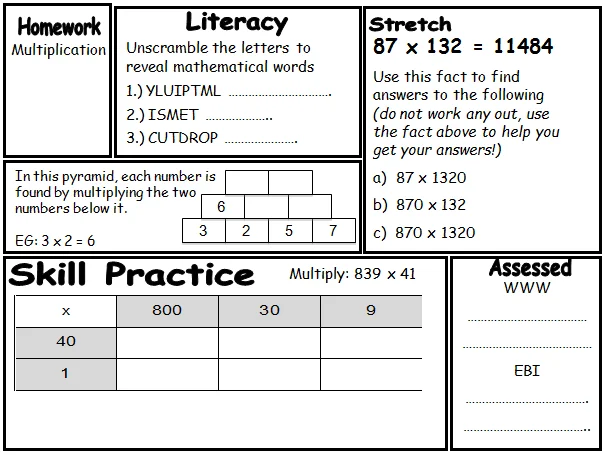
Multiplication (@RoyBird)
Multiplication (@GiftedBA)
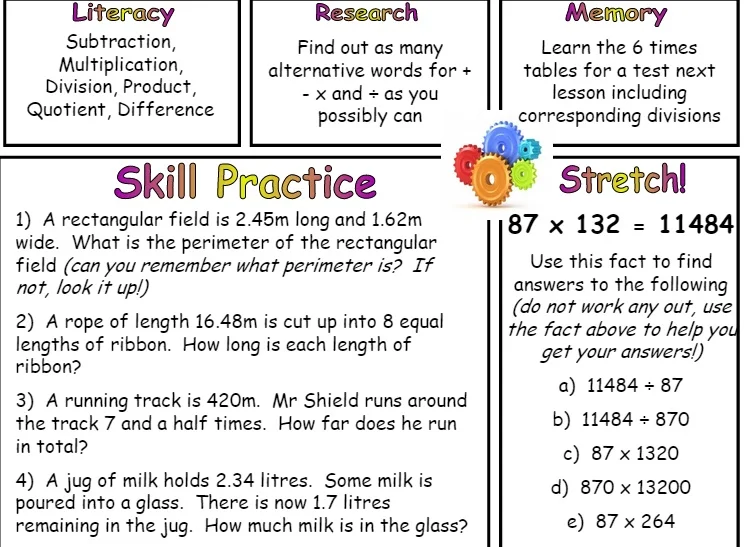
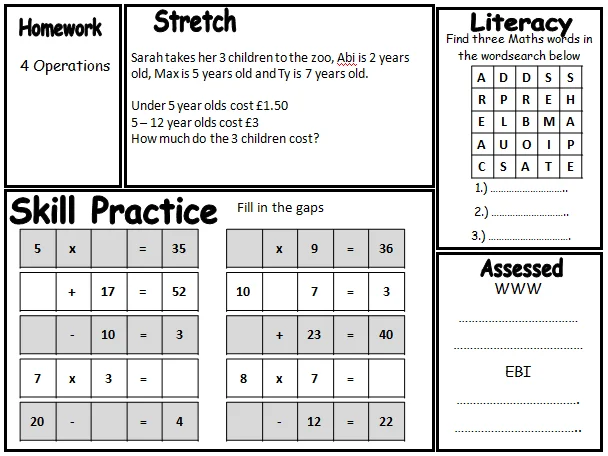
4 Operations (@GiftedBA)
Money (@GiftedBA)
Addition and Subtraction (@PammyWhinfield)
Multiplying Decimals (@TravellingBlue)
Addition and Subtraction (James Male)
Factors, Multiples and Number Properties
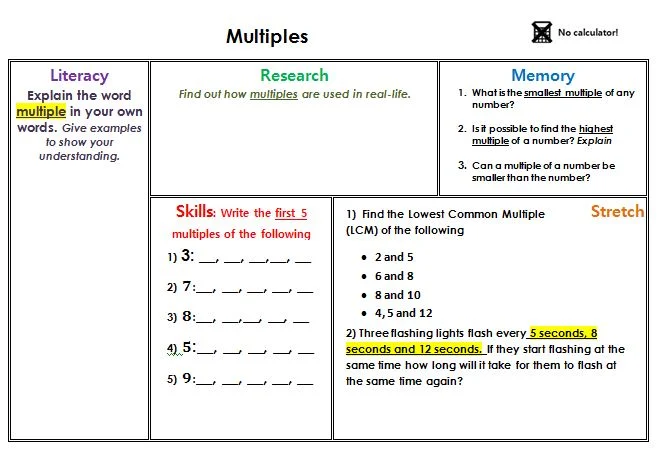
Multiples (@frimymaths)
Factors (Sally Morgan)
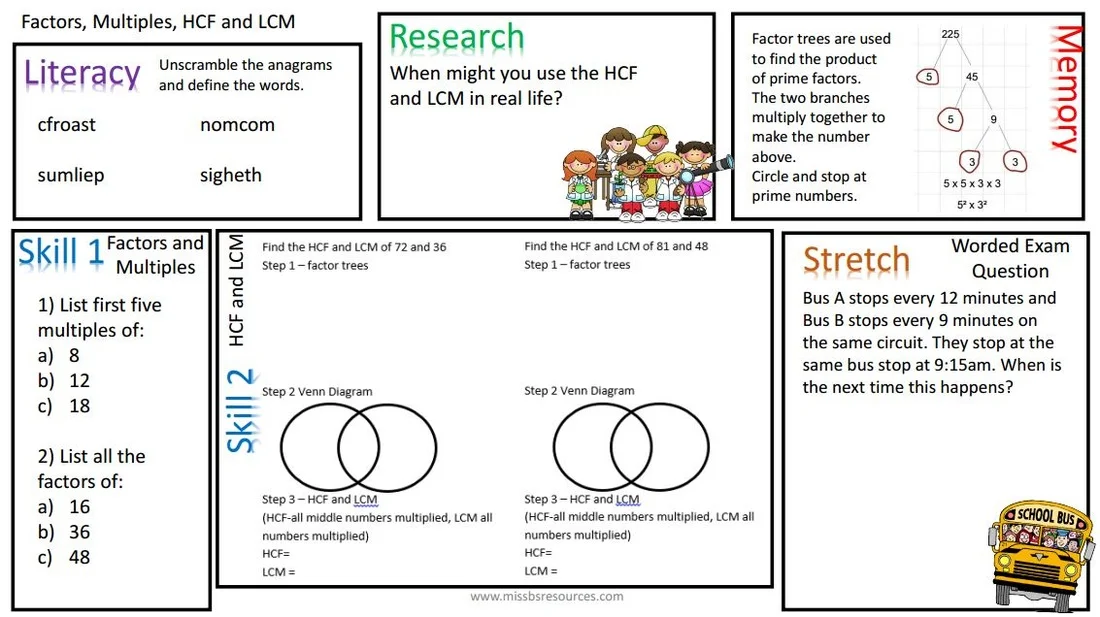
HCF & LCM Venn (@MissBsResources)
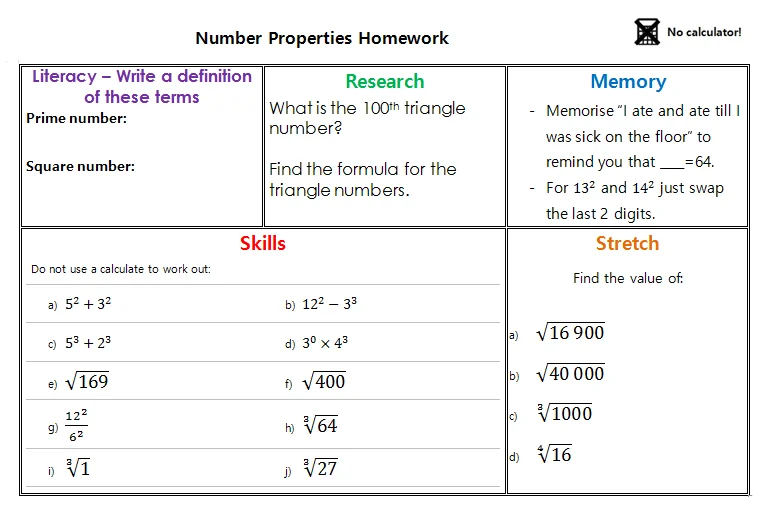
Number Properties (Tom Kendall)
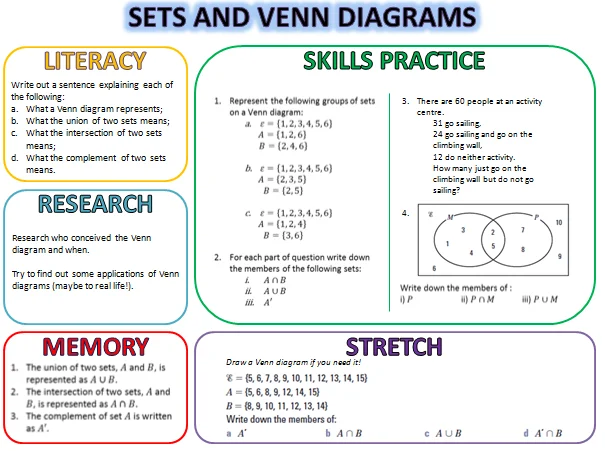
Sets & Venn Diagrams (@RBeckett_Yd)
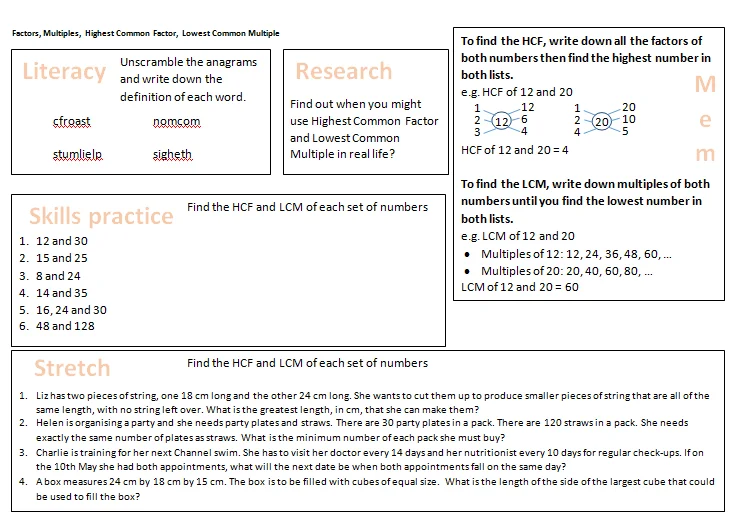
HCF & LCM (@Still_Improving)
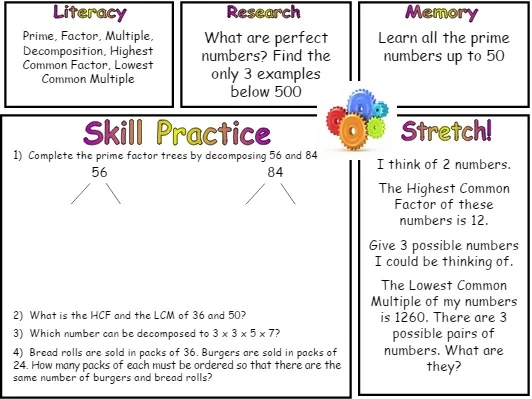
HCF and LCM (Phil Aldridge)
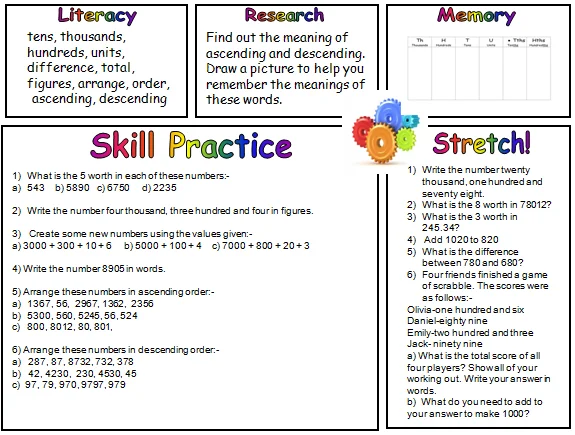
Place Value
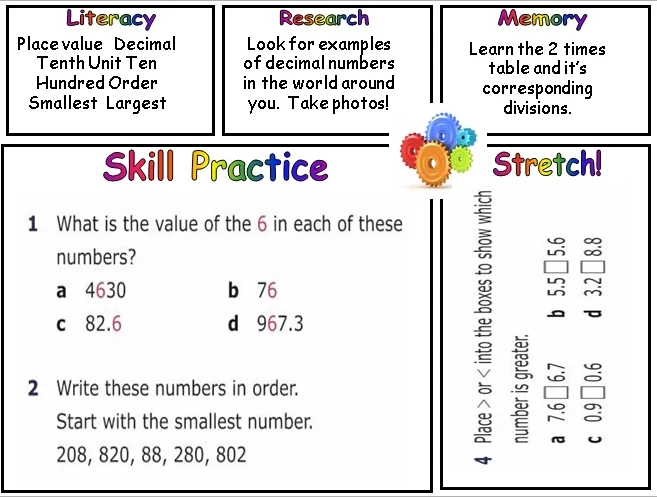
Place value (@Mathsblackcat)
Reading and writing large numbers (@derrybeg73)
Place value (@roybird)
Place value (@PammyWhinfield)
Place value (George Mounsdon)
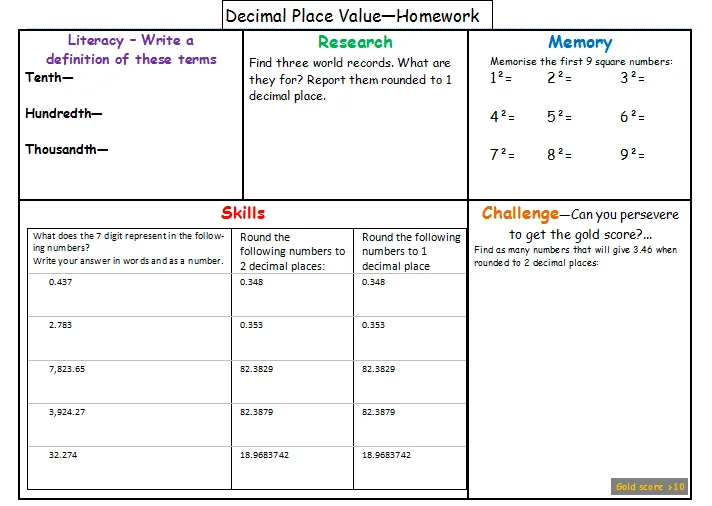
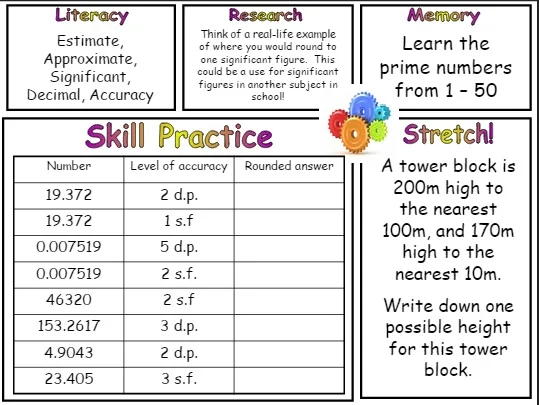
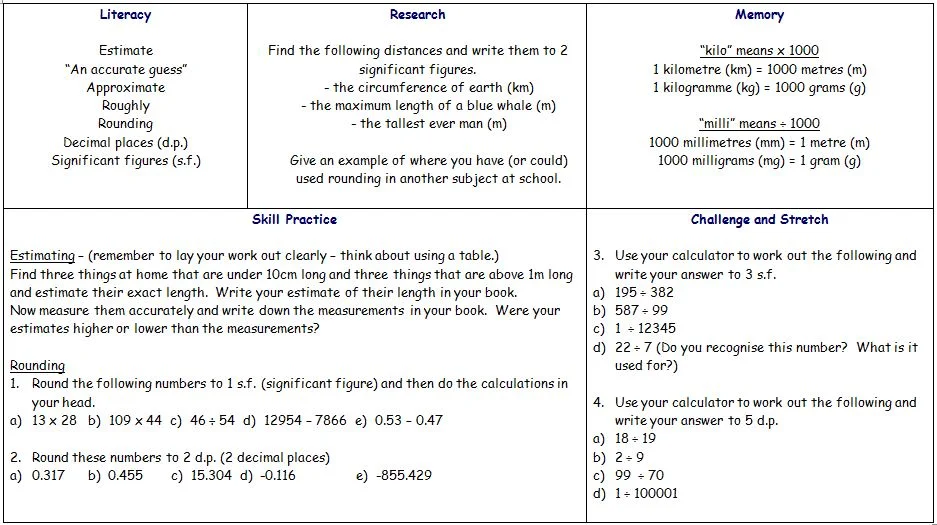
Rounding and Estimation (for bounds, see shape page)
Rounding (@DIRT_expert)
Estimation and Rounding (@JamesW_72)
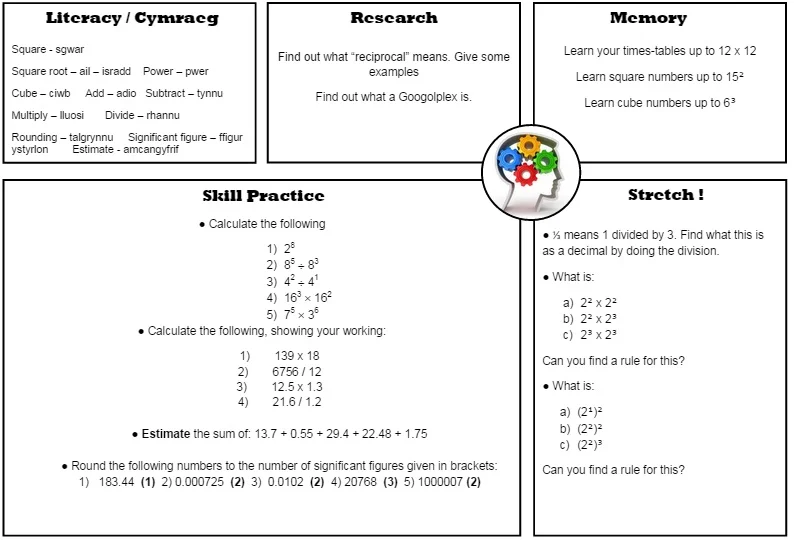
Powers & Estimation (@MrsSEvansYBE)
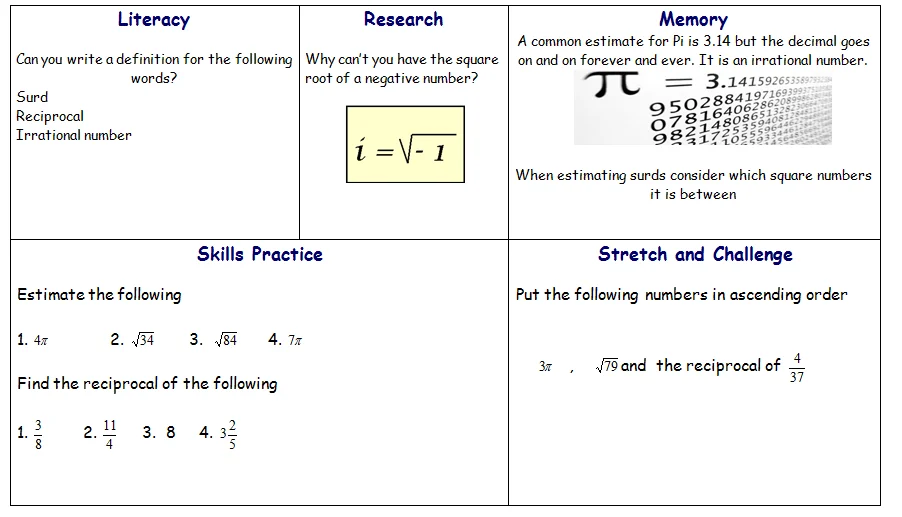
Estimating with pi, fractions and surds (@AdamGoodridge18)
Powers, Standard Form and Surds
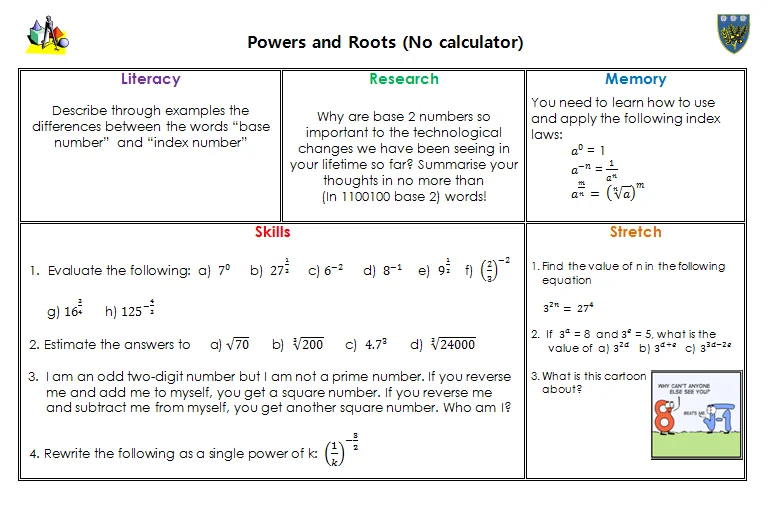
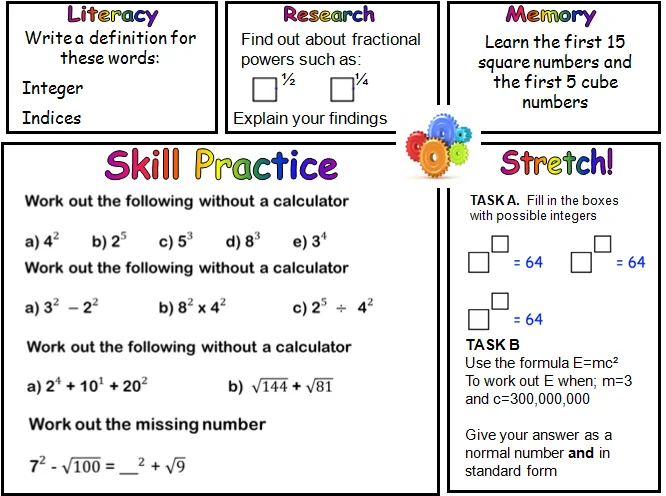
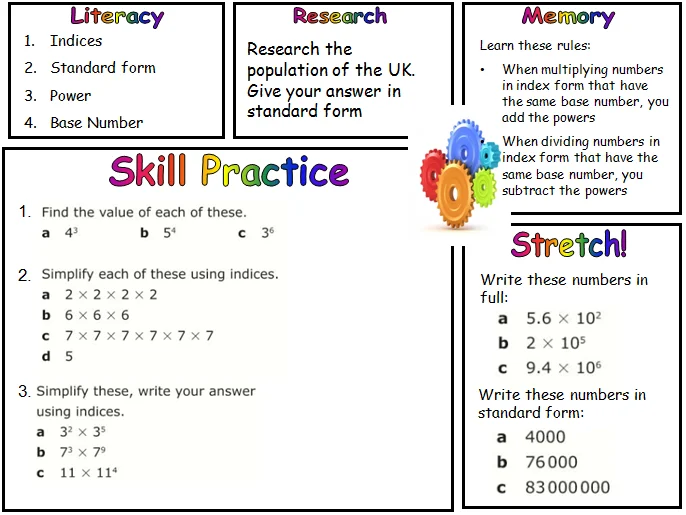
Powers and Roots (@Mr3142)
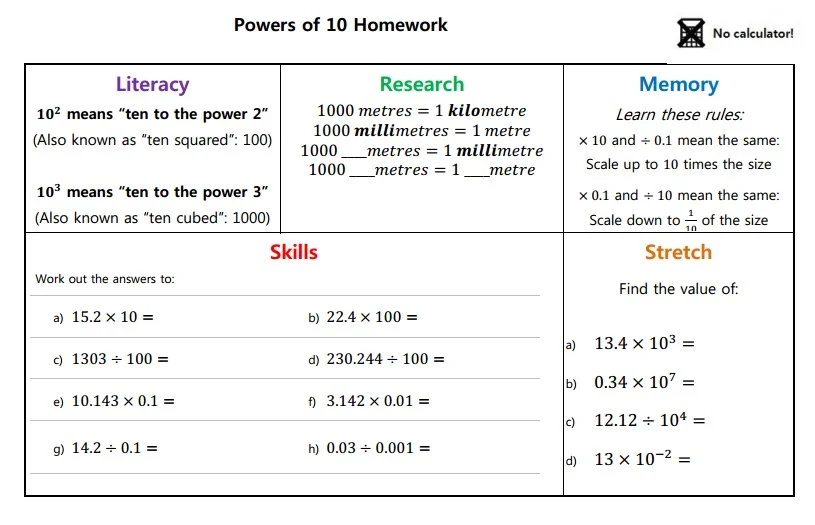
Powers of 10 (@the_chalkface)
Powers (James Male)
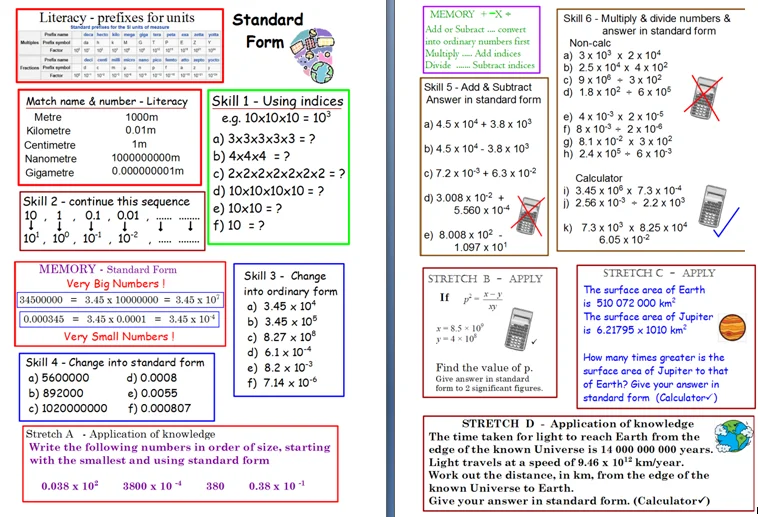
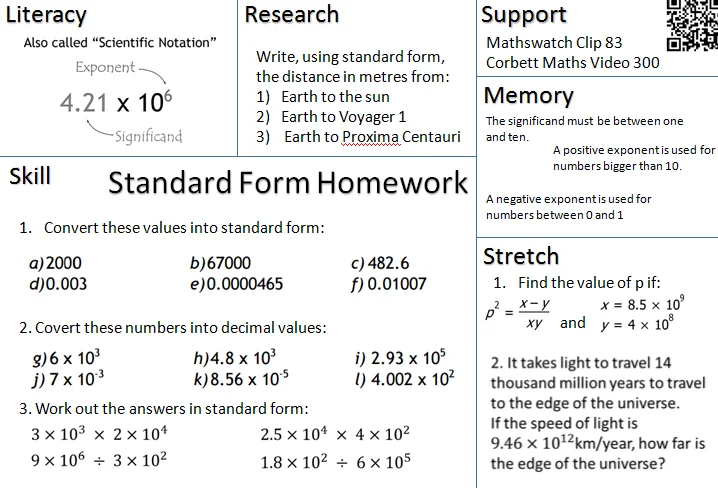
Standard Form (@hjcurry7019)
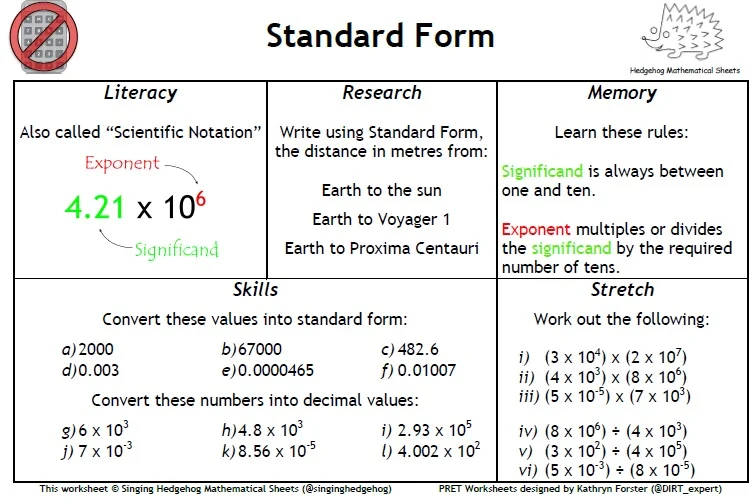
Standard Form (@singinghedgehog)
Standard Form (@DudsPln)
Indices and Standard Form (@Missgourlay)
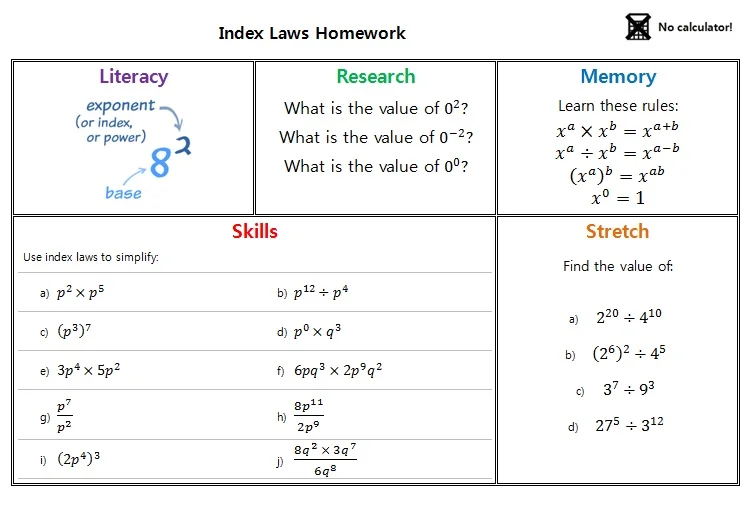
Index Laws (@mathsjem)
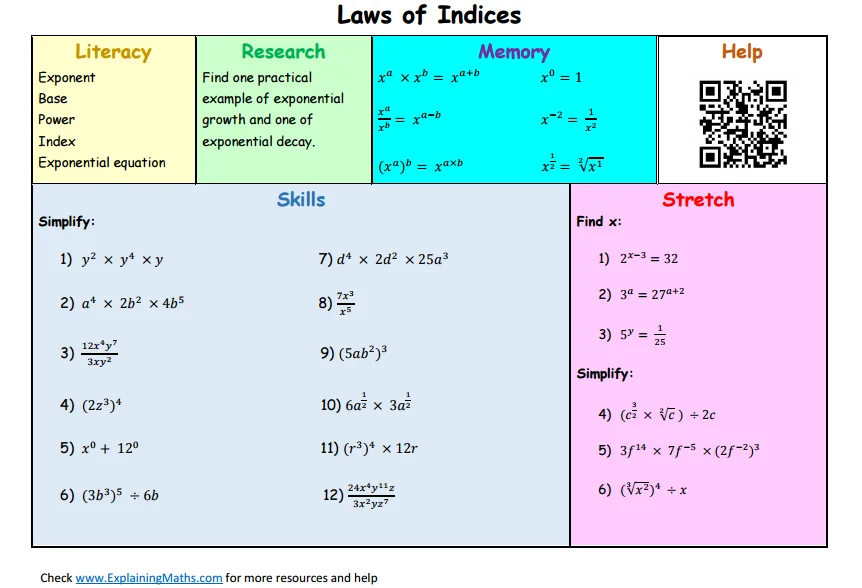
Laws of Indices (@ExplainingMaths)
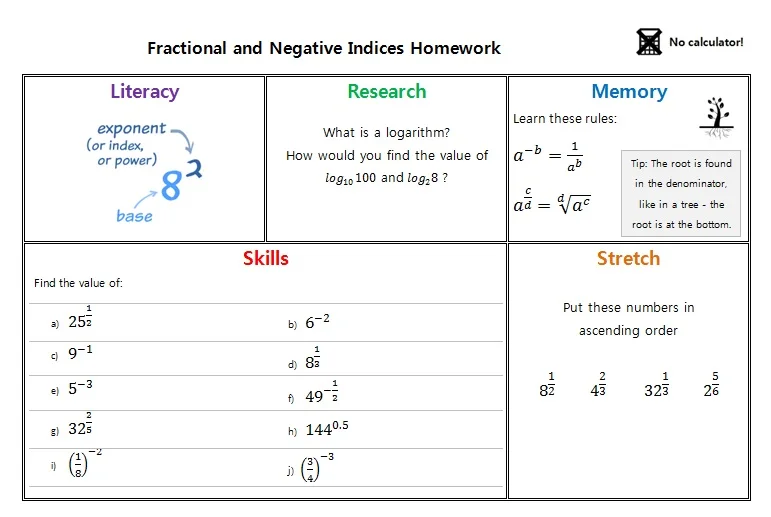
Fractional and Negative Indices (@mathsjem)
Surds (@teacherandy78)
Explain why cancelling works
To simplify eighteen twenty-fourths, find a number that divides both numerator and denominator. Dividing each by six gives three fourths. Picture eighteen marked cells in a grid of twenty-four equal cells. Rearranging the cells into four groups of six gives three marked groups out of four. Subtracting six from each number would change the proportion. Check equivalent fractions by comparing their positions on the number line.
Applying Divisibility Rules
Before we begin our investigation of divisibility, we need to know some facts about important sets of numbers:
The counting numbers are referred to as the natural numbers. This set of numbers, , is denoted with the symbol .
Another important set of numbers is the integers. The integers are the natural numbers, along with 0, and the negatives of the natural numbers. This set is often written as . We denote the integers with the symbol ℤ.
Notice that ℕ is a proper subset of ℤ, or, ℕ ⊂ ℤ. All the ideas of this section apply to the natural numbers, while only some apply to all the integers.
Divisibility is when the integer is divisible by , if can be written as times another integer. Equivalently, there is no remainder when is divided by . There are many occasions when separating items into equal groups comes into play to ensure an equal distribution of whole items. For example, Francis, a preschool art teacher, has 15 students in one class. Francis has 225 sheets of construction paper and wants to provide each student with an equal number of pieces. To know if he will use all the construction paper, Francis is really asking if 225 can be evenly divided into 15 groups.
Determining if a Number Divides Another Number
Determine if 36 is divisible by 4.
Solution
We could divide 36 by 4 and see if there is a remainder, or we could see if we can write 36 as 4 times another integer. If we divide 36 by 4, we see with no remainder. We see that 36 is divisible by 4. We can write 36 as 4 times another integer, . By the definition of divisibility, 36 is divisible by 4.
You can quickly check if a number is divisible by 2, 3, 4, 5, 6, 9, 10, and 12. Each has an easy-to-identify feature, or rule, that indicates the divisibility by those numbers, as shown in the following table.
Divisor
Rule
2
Last digit is even
3
Add the digits of the number together. If that sum is divisible by 3, then so is the original number
4
Look at only the last two digits. If this number is divisible by 4, so is the original number
5
Look at only the last digit. If it is a 5 or a 0, then the original number is divisible by 5
6
If the number passes the rule for divisibility by 2 and for 3, then the number is divisible by 6
9
Add the digits of the number together. If that number is divisible by 9, then so is the original number
10
Look at only the last digit. If it is a 0, then the original number is divisible by 10
12
If the number passes the rule for 3 and 4, the number is divisible by 12
Using Divisibility Rules
Using divisibility rules, determine if 245 is divisible by 5.
Solution
Since the last digit is a 5, the number 245 is divisible by 5 because the rule states if the last digit of the number is a 5 or a 0, then the original number is divisible by 5.
Using Divisibility Rules
Using divisibility rules, determine if 25,983 is divisible by 9.
Solution
The divisibility rule for 9 is when the digits of the number are added, the sum is divisible by 9. So, we calculate the sum of the digits.
. Since 27 is divisible by 9, so is the original number 25,983.
Using Divisibility Rules
Can 298 coins be stacked into 6 stacks with an equal number of coins in each stack?
Solution
In order for the coins to be in equal-sized stacks, 298 would need to be divisible by 6. The divisibility rule for 6 is that the number passes the divisibility rules for both 2 and 3. Since the last digit is even, 298 is divisible by 2. To determine if 298 is divisible by 3, we first add the digits of the number: . Since 19 is not divisible by 3, neither is 298. Because 298 is not divisible by 3, it is also not divisible by 6, which means they cannot be put into 6 equal stacks of coins.
Using Divisibility Rules
Using divisibility rules, determine if 4,259 is divisible by 10.
Solution
The divisibility rule for 10 is that the last digit of the number is 0. Since the last digit of 4,259 is not 0, then 4,259 is not divisible by 10.
Using Divisibility Rules
Using divisibility rules, determine if 936,276 is divisible by 4.
Solution
The divisibility rule for 4 is to check the last two digits of the number. If the number formed by the last two digits of the original number is divisible by 4, then so is the original number. The last two digits make the number 76 and 76 is divisible by 4, since . Since 76 is divisible by 4, so is 936,276.
Prime and Composite Numbers
Sometimes, a natural number has only two unique divisors, 1 and itself. For instance, 7 and 19 are prime. In other words, there is no way to divide a prime number into groups with an equal number of things, unless there is only one group, or those groups have one item per group. Other natural numbers have more than two unique divisors, such as 4, or 26. These numbers are called composite. The number 1 is special; it is neither prime nor composite.
To determine if a number is prime or composite, you have to determine if the number has any divisors other than 1 and itself. The divisibility rules are useful here, and can quickly show you if a number has a divisor on that list.
However, if none of those divide the number, you still have to check all other possible prime divisors. What are the prime numbers that are possibly divisors of the number you are checking? You need only check the prime numbers up to the square root of the number in question. For instance, if you want to know if 2,117 is prime, you need to determine if any primes up to the square root of 2,117 (which is 46.0 when rounded to one decimal place) divide 2,117. If any of those primes are divisors of the number in question, then the number is composite. If none of those primes work, then the number is itself prime.
We can check divisibility with whatever tool we wish. Divisibility rules are quick for some prime divisors (2 and 5 come to mind) but aren't quick for other values (like 11). In place of divisibility rules, we could just use a calculator. If the prime number divides the number evenly (that is, there is no decimal or fractional part), then the number is divisible by that prime. table is a quick list of the prime numbers up to 50. There are 15 prime numbers less than 50.
2
3
5
7
11
13
17
19
23
29
31
37
41
43
47
Prime Numbers Less than 50
Determining If a Number Is Prime or Composite
Determine if 2,117 is prime or composite.
Solution
The square root of 2,117 is 46.0 (rounded to one decimal place). So, we need to check if 2,117 is divisible by any prime up to 46.
Step 1: First we’ll use the rules of divisibility we learned earlier:
We can tell 2,117 is not divisible by 2, as the last digit isn't even.
2,117 is not divisible by 5 (the last digit isn't 0 or 5).
Add the digits of 2,117 to get 11, which is not divisible by 3. So, 2,117 is also not divisible by 3.
Step 2: Now we repeat the process for all the primes up to 46.
Using a calculator, we find that 2,117 divided by the prime numbers 7, 11, 13, 17, 19, and 23 results in a remainder, a decimal part. So, we know that 2,117 is not divisible by these prime numbers. (You should check these results yourself.)
Moving on, we check the next prime: 29. Using the calculator to divide 2,117 by 29 results in 73. Since there is no decimal part, 2,117 is divisible by 29.
This means that 2,117 is not a prime number, but rather, a composite number. Writing 2,117 as the product of 29 and another natural number, .
Determining if a Number Is Prime or Composite
Determine if 423 is prime or composite.
Solution
The square root of 423 is 20.57 (rounded to two decimal places). So, we need to check if 423 is divisible by any prime up to 20.
Step 1: Check 2. We can tell 423 is not divisible by 2, as the last digit isn't even.
Step 2: Check 5. It is not divisible by 5 (the last digit isn't 0 or 5).
Step 3: Check 3. To check if 423 is divisible by 3, we use the divisibility rule for 3. When we take the sum of the digits of 423, the result is 9. Since 9 is divisible by 3, so is 423.
Since 423 is divisible by 3, then 423 is a composite number. Writing 423 as the product of 3 and another natural number, .
Determining if a Number Is Prime or Composite
Determine if 1,034 is prime or composite
Solution
A quick inspection of 1,034 shows it is divisible by 2 since the last digit is even, and so 1,034 is a composite number.
Determining if a Number Is Prime or Composite
Determine if 2,917 is prime or composite.
Solution
The square root of 2,917 is 50.01 (rounded to two decimal places). So, we need to check if 2,917 is divisible by any prime up to 50.
Step 1: Check 2. We can tell 2,917 is not divisible by 2, as the last digit isn't even.
Step 2: Check 5. It is it divisible by 5 (the last digit isn't 0 or 5).
Step 3: Check 3. Using the divisibility rule for 3, we take the sum of the digits of 2,917, which is 19. Since 19 is not divisible by 3, neither is 2,917.
Step 4: Check the rest of the primes up to 50 using a calculator. When 2,917 is divided by every prime number up to 50, the result has a decimal part.
Since no prime up to 50 divides 2,917, it is a prime number.
Finding the Prime Factorization of Composite Numbers
Before we can start with prime factorization, let’s remind ourselves what it means to factor a number. We factor a number by identifying two (or more) numbers that, when multiplied, result in the original number. For instance, 3 and 24, when multiplied, give 72. So, 72 can be factored into . Notice that we could have factored the 72 differently, say as , or , or even as .
Finding the prime factorization of a composite number means writing the number as the product of all of its prime factors. For example, . Notice that all the numbers being multiplied on the right-hand side are prime numbers. Sometimes prime numbers repeat themselves in the factorization. When prime factors do repeat, we may write the prime factorization using exponents, as in . In that equation, the 2 is raised to the 4th power. The 4 is the exponent, and the 2 is the base. More generally, in the exponent notation , the number represented by is the base, and the number represented by is the exponent.
One has to wonder if finding the prime factorization could result in different factorizations. The Fundamental Theorem of Arithmetic tells us that there is only one prime factorization for a given natural number.
Fundamental Theorem of Arithmetic
Every natural number, other than 1, can be expressed in exactly one way, apart from the arrangement, as a product of primes.
The process of finding the prime factorization of a number is iterative, which means we do a step, then repeat it until we cannot do the step any longer. The step we use is to identify one prime factor of the number, then write the number as the prime factor times another factor. We repeat this step on the other, newly found, factor. This step is repeated until no more primes can be factored from the remaining factor. This is easier to see and explain with an example.
Finding the Prime Factorization
Find the prime factorization of 140.
Solution
Step 1: Identify a prime number that divides 140. Since 140 is even (the last digit is even), 2 divides 140. We then factor the 2 out of the 140, giving us .
Step 2: With the other factor, 70, find a prime factor of 70. Since 70 is also even, 2 divides 70. We factor the 2 out of the 70 and the factorization is now .
Notice that we expressed the two factors of 2 as .
Step 3: Look to the remaining factor, 35. The last digit of 35 is 5, so 5 is a factor of 35. We factor the 5 out of the 35. The factorization is now .
Step 4: Look to the remaining factor, 7. Since 7 is prime, the process is complete.
The prime factorization of 140 is .
Factor Trees
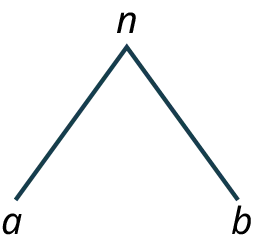
A useful tool for helping with prime factorization is a factor tree. To create a factor tree for the natural number (where is not 1), perform the following steps:
Step 1: If is prime, you're done. If is composite, continue to the next step.
Step 2: Identify two divisors of , call them and .
Step 3: Write the number down, and draw two branches extending down (or to the right) of the number .
Step 4: Label the end of one branch , the other as . See diagram.
Step 5: If and are prime, the tree is complete. When a number at this step is a prime number, we refer to it as a leaf of the tree diagram.
Step 6: If either or are composite, repeat Steps 2 through 4 for and .
Step 7: The process stops when the leaves are all prime.
Step 8: The prime factorization is then the product of all the leaves.
This is best seen in an example.
Finding the Prime Factorization
Find the prime factorization of 66.
Solution
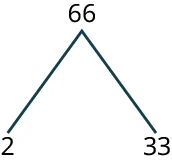
Since 66 is even, 2 is a factor.
Step 1: Factor out the 2. The factorization is . The factor tree is shown in diagram.
Since 2 is a factor, that branch is done, and 2 is a leaf.
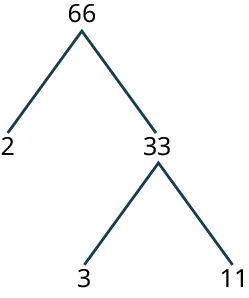
Step 2: The 33, though, is divisible by 3, and is the product of 3 and 11. We attach that to the factor tree (diagram).
Since the 2, 3 and 11 are all prime, the factor tree is done.
The prime factorization of 66 is the product of the leaves, so . The factorization is complete.
Finding the Prime Factorization
Find the prime factorization of 135.
Solution
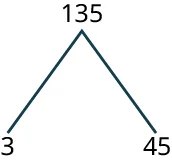
The number 135 is divisible by 3, and so 3 is a factor of 135.
Step 1: Factor out the 3. The factorization is . Using the factor tree (diagram),
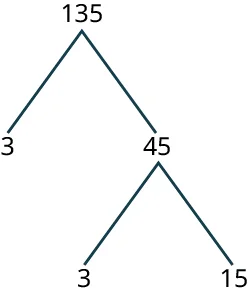
45 is also divisible by 3.
Step 2: Factor out a 3 from 45. The other factor is 15. The factor tree is shown in diagram.
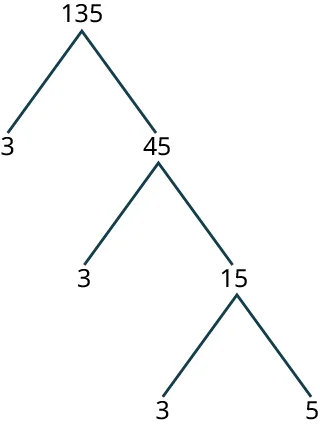
15 is also divisible by 3.
Step 3: The factors of 15 are 3 and 5. The factor tree is shown in diagram.
All the leaves are prime, so the process is complete. The prime factorization of 135 is .
Identifying Prime Factors
How many different prime factors does 10,241 have?
Solution
To know how many different prime factors 10,241 has, we need the prime factorization of 10,241.
Step 1: Use divisibility rules, to see that the number 10,241 is not divisible by 2 or by 3 (the sum of the digits is 8), or by 5. However, it is divisible by 7.
Step 2: After factoring the 7, the factorization is ; 1,463 is also divisible by 7.
Step 3: After factoring the 7, the factorization is . The number 209 is not divisible by 7.
Step 4: Check the next prime number: 11; 11 does divide 1,463.
Step 5: After factoring the 11, the factorization is .
Since 19 is prime, the prime factorization of 10,241 is complete. We see that 10,241 has three different prime factors: 7, 11, and 19.
Finding the Greatest Common Divisor
Two numbers often have more than one divisor in common (all pairs of natural numbers have the common divisor 1). When listing the common divisors, it’s often the case that the largest is of interest. This divisor is called the greatest common divisor and is denoted GCD. It is also sometimes referred to as the greatest common factor (GCF).
For instance, 6 is the greatest common divisor of 12 and 18. We can see this by listing all the divisors of each number and, by inspection, select the largest value that shows up in each list.
The divisors of 12
1, 2, 3, 4, 6, 12
The divisors of 18
1, 2, 3, 6, 9
It is easy to see that 6 is the largest value that appears in both lists.
Finding the Greatest Common Divisor Using Lists
Find the greatest common divisor of 1,400 and 250 by listing all divisors of each number.
Solution
We create a list of all the divisors of 1,400 and of 250, and choose the largest one.
The largest value that appears on both lists is 50, so the greatest common divisor of 1,400 and 250 is 50.
Listing all the divisors of the numbers in the set will always work, but for some relatively small numbers, the set of all divisors can become pretty big, and finding them all can be a chore. Another approach to finding the greatest common divisor is to use the prime factorization of the numbers. To do so, use the following steps:
Step 1: Find the prime factorization of the numbers.
Step 2: Identify the prime factors that appear in every number’s prime factorization. These are called the common prime factors.
Step 3: Identify the smallest exponent of each prime factor identified in Step 2 in the prime factorizations.
Step 4: Multiply the prime factors identified in Step 2 raised to the powers identified in Step 3. The result is the greatest common divisor.
Finding the Greatest Common Divisor Using Prime Factorization
Find the greatest common divisor of 1,400 and 250 by using their prime factorizations.
Solution
Step 1: Find the prime factorizations of the numbers.
The prime factorization of 1,400 is .
The prime factorization of 250 is .
Step 2: Identify the prime factors that appear in every number’s prime factorization.
The common prime factors are 2 and 5.
Step 3: Identify the smallest exponent of each prime identified in Step 2 in the prime factorizations.
The exponent of common prime factor 2 in the prime factorization of 1,400 is 3, and in the prime factorization of 250 is 1. The smallest of those exponents is 1.
The exponent of the common prime factor 5 in the prime factorization of 1,400 is 2 and is in the prime factorization of 250 is 3. The smallest of these exponents is 2.
Step 4: Multiply the prime factors identified in Step 2 raised to the powers identified in Step 3.
This gives . The greatest common divisor of 1,400 and 250 is .
Notice that the answer matches the one we found in Example 3.15.
Finding the Greatest Common Divisor Using Prime Factorization
Find the greatest common divisor of 600 and 784 by using their prime factorizations.
Solution
Step 1: Find the prime factorizations of the numbers.
The prime factorization of 600 is .
The prime factorization of 784 is .
Step 2: Identify the prime factors that appear in every number’s prime factorization.
There is only one common prime factor, 2.
Step 3: Identify the smallest exponent of each prime from identified in Step 2 in the prime factorizations.
The exponent of 2 in the prime factorization of 600 is 3. The exponent of 2 in the prime factorization of 784 is 4. So, the smallest exponent of 2 is 3.
Step 4: Multiply the prime factors identified in Step 2 raised to the powers identified in Step 3.
This gives . The greatest common divisor of 600 and 784 is 8.
Simplify Expressions Using Order of Operations
The order in which mathematical operations is performed is a convention that makes it easier for anyone to correctly calculate. They follow the acronym EMDAS:
E
Exponents
M/D
Multiplication and division
A/S
Addition and Subtraction
So, what does EMDAS tell us to do? In an equation, moving left to right, we begin by calculating all the exponents first. Once the exponents have been calculated, we again move left to right, calculating the multiplications and divisions, one at a time. Multiplication and division hold the same position in the ordering, so when you encounter one or the other at this step, do it. Once the multiplications and divisions have been calculated, we again move left to right, calculating the additions and subtractions, one at a time. Additions and subtractions hold the same position in the ordering, so when you encounter one or the other at this step, do it. (You may have previously learned the order of operations as PEMDAS, with parentheses first; we will add that aspect later on.) We’ll explore this as we work an example.
Using Two Order of Operations
Calculate .
Solution
There are no exponents in this expression, so the next operations to check are multiplication and division.
Step 1: Moving left to right, the first multiplication encountered is 4 multiplied by 13. We perform that operation first.
Step 2: The only operation remaining is the subtraction.
.
So, .
Using Two Order of Operations
Calculate .
Solution
Step 1: Moving left to right, we see there is an exponent. We calculate the exponent first.
Step 2: The only operation remaining is the multiplication.
So, .
Using Three Order of Operations
Calculate .
Solution
Step 1: To calculate this, move left to right, and compute all the exponents first. The only exponent we see is the squaring of the 3, so that is calculated first.
Step 2: Since the exponents are all calculated, now calculate all the multiplications and divisions moving left to right. The only multiplication or division present is 9 times 4.
Step 3: Moving left to right, perform the additions and subtractions. There is only one such operation, 2 plus 36.
So, .
Even if the expression being calculated gets more complicated, we perform the operations in the order: EMDAS.
Using Eight Order of Operations
Correctly apply the order of operations to compute the following:
.
Solution
Step 1: To do so, calculate the exponents first, moving left to right. There are two occurrences of exponents in the expression, 3 squared and 2 cubed.
Step 2: Now that the exponents are calculated, perform the multiplication and division, moving left to right. The first is the product of 25 and 6.
Step 3: Next is the 150 divided by 10.
Step 4: Next is 15 multiplied by 9.
Step 5: Finally, multiply the 7 and 8.
As all the multiplications and divisions have been calculated, the additions and subtractions are performed, moving left to right.
The computed value is −75.
Using Six Order of Operations
Correctly apply the rules for the order of operations to accurately compute the following:
.
Solution
Step 1: Calculate exponents first, moving left to right:
Step 2: Multiply and divide, moving left to right:
Step 3: Add and subtract, moving left to right:
Using Order of Operations
Correctly apply the rules for the order of operations to accurately compute the following:
.
Solution
Step 1: Calculate the exponents first, moving left to right:
Step 2: Multiply and divide, moving left to right:
Step 3: Add and subtract, moving left to right:
Using the Order of Operations Involving Grouping Symbols
We have examined how to use the order of operations, denoted by EMDAS, to correctly calculate expressions. However, there may be expressions where a multiplication should happen before an exponent, or a subtraction before a division. To indicate an operation should be performed out of order, the operation is placed inside parentheses. When parentheses are present, the operations inside the parentheses are performed first. Adding the parentheses to our list, we now have PEMDAS, as shown below.
P
Parentheses
E
Exponents
M/D
Multiplication and division
(division is just the multiplication by the reciprocal)
A/S
Addition and subtraction
(subtraction is just the addition of the negative)
As said previously, parentheses indicate that some operation or operations will be performed outside the standard order of operation rules. For instance, perhaps you want to multiply 4 and 7 before squaring. To indicate that the multiplication happens before the exponent, the multiplication is placed inside parentheses: .
This means operations inside the parentheses take precedence, or happen before other operations. Now, the first step in calculating arithmetic expressions using the order of operations is to perform operations inside parentheses first. Inside the parentheses, you follow the order of operation rules EMDAS.
Prioritizing Parentheses in the Order of Operations
Correctly apply the rules for the order of operations to accurately compute the following:
.
Solution
Step 1: Perform all calculations within the parentheses before all other operations.
Step 2: Since all parentheses have been cleared, move left to right, and compute all the exponents next.
Step 3: Perform all multiplications and divisions moving left to right.
Be aware that there can be more than one set of parentheses, and parentheses within parentheses. When one set of parentheses is inside another set, do the innermost set first, and then work outward.
Working Innermost Parentheses in the Order of Operations
Correctly apply the rules for order of operations to accurately compute the following:
.
Solution
Step 1: Perform all calculations within the parentheses before other operations. Evaluate the innermost parentheses first. We can work separate parentheses expressions at the same time. The innermost set of parentheses has the 2 + 5 inside. The 3 + 8 is in a separate set of parentheses, so that addition can occur at the same time as the 2 + 5.
Step 2: Now that those parentheses have been handled, move on to the next set of parentheses. Applying the order of operation rules inside that set of parentheses, the exponent is evaluated first, then the multiplication, and then the addition.
Step 3: Since all parentheses have been cleared, apply the EMDAS rules to finish the calculation.