Practice Addition Sums
Practice addition with charts, quizzes, fill-in-the-blank sums, multiple choice, missing numbers, true/false checks, timed challenges, calculator-style mental math, order-the-sums games, flashcards, number-line models, ten-frame models, and printable answer keys.
1. Game Settings
Addition Chart
2. Score & Visual
Choose a game mode and solve addition sums with instant feedback.
Visual Model
Progress
3. Step-by-Step Explanation
| Step | Math Work | Strategy |
|---|
Addition Chart / Answer Key
Generated Practice Set
| # | Problem | Answer | Strategy |
|---|
Addition Formulas
Addition combines two or more quantities into a total. If the addends are \(a\) and \(b\), the sum is:
Addition can be shown as counting on:
The commutative property means the addends can switch order without changing the sum:
The associative property helps combine three or more addends:
The make-ten strategy is useful for mental addition:
Place-value addition separates tens and ones:
Complete Guide to Practicing Addition Sums
Addition is one of the first major operations students learn. It means combining quantities, joining groups, counting on, increasing a number, or finding a total. A child may first understand addition by putting together objects: three counters and two counters make five counters. Later, the same idea becomes a number sentence: \(3+2=5\). This tool is designed to connect those stages with charts, games, visuals, formulas, and practice.
The most basic addition sentence has two addends and one sum. In \(8+4=12\), the numbers 8 and 4 are addends, and 12 is the sum. Students should learn this vocabulary because it makes explanations clearer. When a teacher says “find the missing addend,” the student knows to look for the missing part of an addition sentence.
Addition begins with counting. A student may solve \(5+3\) by starting at 5 and counting on three steps: 6, 7, 8. This is more efficient than counting all five and then all three. Counting on is a strong early strategy because it builds the idea that addition increases a number by a known amount.
The number line makes counting on visible. To solve \(6+4\), start at 6 and make four jumps. The landing point is 10. This visual model helps students see addition as movement to the right. It also prepares them for subtraction as movement to the left and for later work with integers and coordinate lines.
Ten frames are another powerful visual model. A ten frame has ten spaces arranged in two rows of five. Students can see how close a number is to ten. For example, 8 needs 2 more to make 10. If the problem is \(8+6\), students can split 6 into 2 and 4. Then \(8+2=10\), and \(10+4=14\). This is the make-ten strategy.
Make-ten is one of the most important mental addition strategies. It is especially useful for facts such as \(8+5\), \(9+4\), \(7+6\), and \(8+7\). The method is not a trick. It uses the structure of our base-ten number system. Students who understand making ten are better prepared for adding two-digit numbers.
Doubles are addition facts where both addends are the same: \(1+1\), \(2+2\), \(3+3\), and so on. Doubles are often easy to memorize because they have rhythm. Near doubles use a known double to solve a nearby fact. If a student knows \(6+6=12\), then \(6+7=13\) is one more. If the student knows \(8+8=16\), then \(8+9=17\) is one more.
The commutative property of addition says that addends can switch order without changing the sum. For example, \(3+9=9+3\). This reduces the number of facts students need to memorize. If they know \(9+3=12\), then they also know \(3+9=12\). An addition chart makes this property visible because the table is symmetrical across the diagonal.
The associative property helps with three or more addends. It says that the grouping can change without changing the total. For example, \((2+8)+5=2+(8+5)\). Students can use this property to make easier combinations. In \(2+6+8\), the 2 and 8 can make 10, so the total is \(10+6=16\).
Missing-number addition develops algebraic thinking. A problem such as \(7+\square=12\) asks students to find the unknown addend. They may count on from 7 to 12, use related subtraction, or recall a fact family. This prepares students for equations, variables, and inverse operations.
True/false addition develops mathematical reasoning. A statement such as \(8+5=14\) is false, while \(8+5=13\) is true. Students must evaluate the whole statement, not just calculate quickly. This supports precision, checking, and explaining.
Multiple-choice practice helps students compare close answers. Good distractors are not random. They often include common mistakes such as being off by one, forgetting to carry, or adding only one place value. When students explain why wrong choices are wrong, their understanding improves.
Order-the-sums practice helps students compare values. Students solve several addition facts, then arrange them from smallest to largest. This combines addition fluency with comparison and number sense. It also helps students see that a larger addend usually creates a larger sum, but the total depends on both addends.
Timed practice can be useful after students understand the strategies. It should not be the only method. Speed without understanding can create anxiety and guessing. A balanced approach uses visual models and strategies first, then short timed rounds for fluency. This tool includes timed challenge mode but also includes hints and explanations.
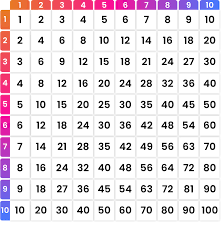
Addition charts are useful because they show patterns. The row for 8 increases by one each time the column addend increases by one. The diagonal of doubles shows \(1+1\), \(2+2\), \(3+3\), and so on. Make-ten pairs such as \(1+9\), \(2+8\), \(3+7\), and \(4+6\) can be highlighted. These patterns help students move from memorization to structure.
Two-digit addition builds on one-digit facts. To solve \(34+25\), students can add tens and ones separately: \(30+20=50\) and \(4+5=9\). The total is 59. When the ones add to 10 or more, students regroup. For example, \(38+27=(30+20)+(8+7)=50+15=65\). Regrouping is easier when students already understand making ten.
Addition is also a reading skill in word problems. Students must decide what situation is being described. “There are 6 apples. Then 4 more are added” is an adding-to situation. “There are 5 red balls and 3 blue balls” is a putting-together situation. The operation may be the same, but the story structure helps students understand what the numbers mean.
This page is not an official exam score calculator. There is no universal score guideline, score table, or next exam timetable for addition practice games. This tool supports learning and practice for early arithmetic, especially kindergarten, Grade 1, and Grade 2 addition fluency. For official exams, schedules, and scoring rules, students and parents should follow the relevant school, district, state, or exam-board calendar.
Reference Links
Useful curriculum references: Common Core Kindergarten Operations & Algebraic Thinking, Common Core Grade 1 Operations & Algebraic Thinking, Common Core Grade 2 Operations & Algebraic Thinking.
How to Use Practice Addition Sums
- Choose a game mode. Use the blue/green game buttons to switch between chart, quiz, fill blanks, multiple choice, timed challenge, true/false, and flashcards.
- Set the number range. Choose the minimum and maximum addends according to the student’s level.
- Select addends. Use two addends for beginner practice or three to five addends for advanced mental math.
- Generate a problem. Click New Question to create a fresh addition sum.
- Answer and check. Type the sum or missing number, then click Check Answer.
- Use hints. The hint button explains strategies such as count on, make ten, doubles, near doubles, and place value.
- Print or export. Print the chart, copy the results, or download a CSV answer key.
| Game Mode | What Students Practice | Best Use |
|---|---|---|
| Addition Chart | Patterns, sums, make-ten pairs, and focus addends. | Reference chart, worksheet, and classroom display. |
| Interactive Quiz | Solving random addition sums. | Daily practice and homework review. |
| Fill Blanks | Completing addition equations. | Understanding unknown values and equation structure. |
| Multiple Choice | Choosing the correct sum from close options. | Quick review and error recognition. |
| Order the Sums | Comparing sums from smallest to largest. | Number sense and comparison practice. |
| Timed Challenge | Fluency after understanding. | Short speed practice rounds. |
| Missing Number | Finding an unknown addend. | Fact families and early algebra thinking. |
| True/False | Checking whether an equation is correct. | Reasoning and careful verification. |
| Calc Challenge | Mental addition across several steps. | Working memory and multi-addend fluency. |
| Flash Card | Fast recall of addition facts. | Retrieval practice and daily fluency. |
Score, Course, and Exam Table Note
| Requested Item | Status for This Addition Tool | Correct Guidance |
|---|---|---|
| Score guidelines | Not applicable | This is an addition learning and practice tool, not an official score calculator. |
| Score table | Not applicable | There is no universal score table for addition practice games. |
| Next exam timetable | Not applicable | Use official school, district, state, or exam-board sources for course-specific exam dates. |
| Course relevance | Highly relevant for early arithmetic | Supports addition within 10, within 20, within 100, word-problem readiness, fact fluency, and mental math. |
Practice Addition Sums FAQ
What is an addition sum?
An addition sum combines two or more addends to find a total. For example, in \(8+4=12\), 8 and 4 are addends and 12 is the sum.
What is the best way to practice addition facts?
Start with counting objects, number lines, ten frames, doubles, and make-ten strategies. Then use quizzes, flashcards, and short timed rounds to build fluency.
What does “count on” mean?
Counting on means starting with the larger number and counting forward by the smaller number. For example, \(7+3\) becomes 8, 9, 10.
What is the make-ten strategy?
Make-ten means splitting one addend to complete a ten. For example, \(8+6=8+2+4=10+4=14\).
Why are doubles helpful?
Doubles such as \(6+6=12\) are easy to remember and help with near doubles such as \(6+7=13\).
Can this tool make printable worksheets?
Yes. Use Addition Chart mode, switch chart answers to blank worksheet if needed, then print or save the page as a PDF.
What grade level uses this tool?
It is most useful for kindergarten through Grade 2 addition practice, and for any learner who needs extra addition fluency support.