
Year 12 Pure – WorkBooks
Choose an algebra activity by the skill it tests, then use a worked example to check whether the method transfers to a new question.
Quick Answer
The Year 12 Pure workbooks group activities for topics such as indices. Use a workbook to practise a rule, then check whether you can recognise the same rule in a question with different notation.

Some older worksheet addresses lead to a publisher landing page. Search the resource finder for “alternate PDF” to find the additional publisher copies. Maths Genie A Level resource index
Indices and Surds
- Commentary/misconceptions/prompts – MEI
- Indices activity – SRWhitehouse on TES
- Using indices – Standards Unit
- Indices activities and Further indices activities – Susan Wall via STEM Centre
- Integer exponents and Rules of Exponents and Rational Exponents – martahidegkuti.com
- Fractional Indices – mathshelper.co.uk
- Index issues – Underground Maths
- Exponential equations – by me!
- Exponential equations – SRWhitehouse on TES
- Equating powers – mathshelper.co.uk
- Indices exam questions – madasmaths
- Roots and indices maze – FMSP
- True or false surds activity – Susan Wall
- Surds arithmagons – MEI
- Manipulating surds – Standards Unit
- Surds worksheet – mathshelper.co.uk
- Surds exam questions – madasmaths
- Ab-surd! / Scary Sum / Nested surds – Underground Mathematics
- Surds and indices worksheets (solutions) – Solomon
- Surds and indices exam questions (solutions) – compiled by naikermaths.com
- Surds and indices questions (solutions) – Dr Oliver
- Surds and indices end of topic test – Crashmaths
Simultaneous Equations and Inequalities

- Commentary/misconceptions/prompts – MEI
- Introduction to algebra matching activity – SRWhitehouse on TES
- 10 minute tests – Jethwa Maths
- Simultaneous Equations – SRWhitehouse on TES
- Quadratic meets linear – Don Steward
- Simultaneous Equations exam questions with solutions – StudyWell
- Inequalities worksheets – SRWhitehouse on TES
- Quadratic inequalities – spot the mistake – by me!
- Quadratic inequalities – mssteelmaths.com
- Categorising quadratic inequalities – MEI
- Inequalities: regions – Don Steward
- Inequality sets, Linear inequalities graphically, Inequalities for some occasions, Two-way algebra – Underground Mathematics
- Equations and inequalities slides – Dr Frost
- Simultaneous equations questions (solutions) – Dr Oliver
- Algebra worksheets (solutions) – Solomon
Quadratics

- Commentary/misconceptions/prompts – MEI
- 10 minute tests – Jethwa Maths
- Quadratic points – Don Steward
- Quadratic functions – Susan Wall
- Quadratics two-way table – MEI
- Quadratics card sort – Standards Unit
- SRWhitehouse on TES: Factorising quadratics, Completing the square, Sketching quadratics, Quadratic formula activity, Quadratics revision, Mixed quadratics questions
- Quadratic formula topic review sheet – Maths4Everyone on TES
- Quadratic formula proof activity – Underground Mathematics
- The shape of the quadratic function (discriminant) – Teachit Maths
- Discriminating (& teacher notes) – undergroundmathematics.org
- Quadratics in disguise – mathshelper.co.uk
- Hidden quadratics fill in the blanks – Swinton Maths
- Pick a card / Which parabola? / Quadratic solving sorter / Which quadratic / Parabella – Underground Maths
- Modelling with quadratics – Illustrative Math
- Quadratics slides – Dr Frost
- Algebra worksheets (solutions) – Solomon
- Quadratics exam questions (solutions) – compiled by naikermaths.com
- Quadratic equations questions (solutions) – Dr Oliver
- Discriminant questions (solutions) – Dr Oliver
- Quadratics end of topic assessment (solutions) – Crashmaths.com
Proof 
- Proof questions (solutions) – Maths Genie
- Check-in test and delivery guide – OCR
- When is 6×7=42 a counter-example? – Underground Maths
- Proof worksheet – phildb on TES
- Proof and Reasoning – University of Birmingham
- Algebraic methods slides – Dr Frost
- Proof worksheet (solutions) – CrashMaths
Graphs and Transformations

- Cubic graphs – Susan Wall
- Matching activity for cubic graphs – SRWhitehouse on TES
- Underground Mathematics: Can you find… cubic edition and curve match
- Sketching cubics booklet – madasmaths
- Cubics exam questions – madasmaths
- Cubics worksheet – StudyWell
- Graphing Reciprocal Functions – martahidegkuti.com
- Functions stack – MathsPad
- Graphs mystery – Durham County Council
- Representing polynomials – Mathematics Assessment Project
- Graph transforms – Median Don Steward
- Transforming graphs card match – Teachit Maths
- Transformations of curves activities – SRWhitehouse on TES
- Underground Mathematics: Transformers, Translating or Not?, Order! Order!
- Graphs of functions worksheets (answers) – Solomon
- Graphs and transformations slides – Dr Frost
- Cubics exam questions with solutions – StudyWell
- Factors questions (solutions) – Dr Oliver
- Transformations exam questions with solutions – StudyWell
Coordinate Geometry – Linear Graphs
- Tilted Square – MEI
- Finding Equations of Parallel and Perpendicular Lines – Mathematics Assessment Project
- Perpendicular lines worksheet – by me!
- Connecting perpendicular lines – Standards Unit
- Venn activity – Median Don Steward
- Straight line arithmagons – MEI
- Coordinate geometry group cards – JellyMaths on TES
- Straight Line worksheets – SRWhitehouse on TES
- Linear functions tasks – STEM Centre
- Lots of lines / Straight line pairs – Underground Maths
- Straight line graphs slides – Dr Frost
- Linear graphs worksheets (answers) – Solomon
- Exam questions (solutions) – Dr Oliver
- Linear graphs exam questions (answers) – compiled by naikermaths.com
Coordinate Geometry – Circles

- Equations of circles worksheets – SRWhitehouse on TES
- Equations of Circles 1 & Equations of Circles 2 – Mathematics Assessment Project
- Increasingly Difficult Circle Equations – @bucksburnmaths
- Circle Geometry – STEM Centre
- Circle Problems 1 & Circle Problems 2 – martahidegkuti.com
- Underground Maths: Finding circles, Teddy bear, Pairs of circles
- Circles slides – Dr Frost
- Circles worksheets (solutions) – Solomon
- Circles questions (solutions) – Dr Oliver
- Equation of a circle exam questions with solutions – StudyWell
Differentiation

- Commentary/misconceptions/prompts – MEI
- Newton, Leibniz, and Usain Bolt – Video from Khan Academy
First principles
- Differentiation from first principles notes and exercise – RMIT
- Differentiation from first principles – SR Whitehouse on TES
- Questions on differentiation from first principles (solutions) – Maths Genie
- Underground Maths: To the limit | Zooming in
- Differentiation Introduction – phildb on TES
Differentiation of xn
- Basic differentiation – Craig Barton via variationtheory.com
- Differentiation of polynomials – Maths4Everyone on TES
- Dominoes – simple polynomials and factorised quadratics – Teachit Maths
- Differentiation snap – Teachit Maths
- Calculus spiders – alutwyche on TES
- Differentiation Worksheets – SRWhitehouse on TES
- Matching functions and derivatives – Standards Unit
- Differentiation Practice – martahidegkuti.com
- Tangents and normals worksheets – SRWhitehouse on TES
- Tangents and normals exam questions – compliled by Physics and Maths Tutor
- SRWhitehouse on TES – Increasing and decreasing functions, Turning Points Worksheets, Optimisation examples, Optimisation worksheet
- Increasing and decreasing functions activity – undergroundmathematics.org
- Baked Beans optimisation -The Chalk Face
- Maxima and minima problems (notes & slides) – Nuffield Foundation
- Underground Maths: Floppy Hair
- Stationary points exam questions (solutions) – collated by naikermaths.com
Differentiation General
- Differentiation worksheets 1 (solutions) – Solomon
- Differentiation worksheets 2 (solutions) – Solomon
- Differentiation booklets – madasmaths
- Matching functions to their derivatives – Desmos
- Underground Maths: Gradient match | Slippery slopes | Gradients of gradients
- Differentiation slides – Dr Frost
- Differentiation exam questions and solutions – StudyWell
- Exam questions part 1 (solutions) – Dr Oliver
- Exam questions part 2 (solutions) – Dr Oliver
- Mixed Differentiation Questions – SRWhitehouse on TES
 Integration
- Commentary/misconceptions/prompts – MEI
- Indefinite integration activities – SRWhitehouse on TES
- Definite integration worksheets – SRWhitehouse on TES
- Definite integration – @blatherwick_sam via variationtheory.com
- Integration dominoes – Teachit Maths
- Underground Maths – Integral chasing, Meaningful areas, Additional integrals, Stretching an integral
- Calculus card match – MEI
- Differentiating and integrating fractional and negative powers – Standards Unit
- Integration slides – Dr Frost
- Integration booklets – madasmaths
- Indefinite integration worksheets (solutions) – Solomon
- Definite integration worksheets (solutions) – Solomon
- Indefinite integration exam questions (solutions) – collated by naikermaths.com
- Definite integration exam questions (solutions) – collated by naikermaths.com
- Indefinite integration questions (solutions) – Dr Oliver
- Definite integration questions (solutions) – Dr Oliver
Factor Theorem and Algebraic Division (nb: remainder theorem is no longer on specification)

- Fun Sheet: Algebraic division – Longman Cheshire
- Dividing Polynomials (not by long division) – ayoob on TES
- Divide it up – Underground Maths
- Representing polynomials – Mathematics Assessment Project
- Factorising cubics – Standards Unit
- Factor Theorem PowerPoint – Teachit Maths
- Algebraic methods worksheets – joe_berwick on TES
- Polynomial division and the factor theorem – Joe Berwick via variationtheory.com
- Factor and Remainder Theorem – SRWhitehouse on TES
- Factor Theorem Activities – Susan Wall, MEI
- Functions Builder II – Underground Maths
- Algebra worksheets (solutions) – Solomon
- Algebraic methods slides – Dr Frost
- Factor theorem exam questions (solutions) – collated by naikermaths.com
- See my blog post about methods for polynomial division
Logs and Exponentials

- Commentary/misconceptions/prompts – MEI
- Exponentials and logs slides – Dr Frost
Logs
- Simplifying expressions using log laws – STEM Centre
- Logs function booklet – Mathematics Vision Project
- Logarithms – Joe Berwick via variationtheory.com
- Logs dominoes – TeachIt Maths
- Logs worksheets – SRWhitehouse on TES
- Student activities on introducing logarithms – Project Maths
- Simplifying logarithmic expressions – Standards Unit
- Logs worksheets (solutions) – Solomon
- Logs exam questions (solutions) – collated by naikermaths.com
- Logs questions (solutions) – Dr Oliver
- Exponential graphs and Exponential growth and decay – Core Maths
- Exponentials and logs worksheets – eMathinstruction
- Exponential rates of change – Nuffield
- Derivative of the exponential function – Joe Berwick via variationtheory.com
- Plotting the planets – Underground Maths
- Matching graph sketches (includes e and ln) – Teachit Maths
- Exponentials worksheet A (solutions) – Solomon
- Exponentials worksheet B (solutions) – Solomon
- Modelling with exponentials exam questions (solutions) – collated by naikermaths.com
 Binomial Expansion
- Commentary/misconceptions/prompts – MEI
- Pascal’s Triangle
- Fun Sheet: Factorials – Longman Cheshire
- The Binomial Theorem – TeachIt Maths
- Binomial Expansion – Joe Berwick via variationtheory.com
- Binomial expansion lock game – danwalker on TES
- Binomial expansion worksheets – SRWhitehouse on TES
- Binomial topic test – MEI
- Binomial expansions progression – Colmanweb.com
- Binomial slides – Dr Frost
- Binomial worksheets (solutions) – Solomon
- Binomial expansion questions (solutions) – Dr Oliver
- Binomial exam questions (solutions) – collated by naikermaths.com
 Trigonometry (nb – radians are now covered in Year 13)
Trig Ratios
- Area of a triangle 1/2absinc – Maths4Everyone on TES
- Sine Rule – Median Don Steward
- Sine Rule (ambiguous case) – langy74 on TES
- Cosine Rule – Median Don Steward
- Cosine rule topic review sheet – Maths4Everyone on TES
- Trigonometric application worksheets (Sine Rule, ambiguous case etc) – eMathinstruction
- Trig ratios exam questions – collated by naikermaths.com
- Trig worksheet A (solutions) – Solomon
- Trigonometric ratio slides – Dr Frost
- Trigonometric Graphs Workbook – Chris McGrane
- Introduction to Trigonometric Functions – Project Maths
- Trigonometry activities – SRWhitehouse on TES
- Symmetry in Trigonometric Graphs – pas1001 on TES
- Trigonometric Graphs Guess Who – andy_gillen on TES
- Transforming sinx – Teachit Maths
- Fun sheets: Trigonometric Expressions and Trigonometric Identities – Longman Cheshire
- Solving trigonometric equations – MEI
- Trig equations and identities worksheets – eMathinstruction
- Trig identities match up (Answers) – Dr Austin
- Trig proof practice strips (Answers) – Dr Austin
- Trig identities questions – Corbett Maths
- Trig identities worksheets – SRWhitehouse on TES
- Trig equations worksheets – SRWhitehouse on TES
- Trigonometric equations – mathshelper.co.uk
- Trigonometric identities & equations slides – Dr Frost
- Trigonometry exam questions (solutions) – Dr Oliver
- Trigonometric identities & equations exam questions (solutions) – collated by naikermaths.com
Vectors

- Commentary/misconceptions/prompts – MEI
- Vectors practice – Marta Hidegkuti
- Column vectors – mathshelper.co.uk
- Magnitude of column vectors – mathshelper.co.uk
- Hit the spot – Underground Maths
- Vectors mini-tests/starters – Jethwa Maths
- Vectors worksheets – Jethwa Maths
- Vectors exam style questions (solutions) – Maths Genie
- Vectors worksheet A (solutions) – Solomon
- Vectors slides – Dr Frost
General teaching resources, revision & assessment
- A level resources including worksheets, topic tests and practice papers – Jethwa Maths
- Videos for the entire A level specification – tlmaths.com
- Exam questions by topic – Maths Genie
- Practice papers – crashmaths.com
- Practice papers – naikermaths.com
- Knowledge organisers – arwah on TES
- Legacy Edexcel exam questions by topic – collated by Chris Ansette
- Legacy exam papers (all modules and boards)
- Legacy assessments by topic – Oxford University Press
- Question packs by topic – Stuart Price
- IYGB Papers for new A level – madasmaths.com
- Question Revision Countdown – crashmaths.com
- Year 12 pure content: key facts quiz (with Kahoot by Clarissa Grandi)
- Year 12 Pure PowerPoints – Owen134866 on TES
- AQA: e-Library, Topic Tests, A level Teaching Guidance, Formula Poster
- Edexcel: Baseline Tests, Unit Tests
- MEI: MEI Scheme of Work (with teaching commentary and resources)
- OCR: OCR’s A level resources: Check-in Tests, Delivery Guides etc
For legacy resources, see my C1/C2 page and C3/C4 page.

Download files for Year 12 Pure – WorkBooks
Use two checks when simplifying a square root
Start with the square root of seventy-two. Factor seventy-two into thirty-six times two and take the square root of the perfect square to obtain six times the square root of two. Squaring this proposed result gives seventy-two again. For a second check, the original root lies between eight and nine because seventy-two lies between sixty-four and eighty-one. A result of thirty-six times the square root of two fails that estimate immediately. After a worksheet, try a different radicand and explain your choice of perfect-square factor.
Use the Product Property to Simplify Radical Expressions
Simplify Square Roots Using the Product Property of Roots
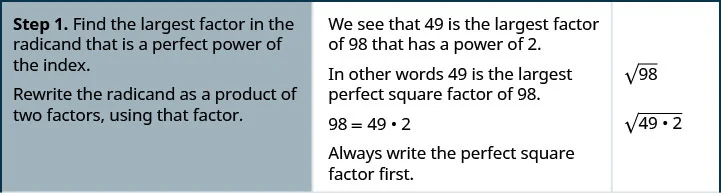


| Rewrite the radicand as a product using the largest perfect square factor. | |
| Rewrite the radical as the product of two radicals. | |
| Simplify. |
| Rewrite the radicand as a product using the greatest perfect cube factor. | |
| Rewrite the radical as the product of two radicals. | |
| Simplify. |
| Rewrite the radicand as a product using the greatest perfect fourth power factor. | |
| Rewrite the radical as the product of two radicals. | |
| Simplify. |
| Rewrite the radicand as a product using the largest perfect square factor. | |
| Rewrite the radical as the product of two radicals. | |
| Simplify. |
| Rewrite the radicand as a product using the largest perfect cube factor. | |
| Rewrite the radical as the product of two radicals. | |
| Simplify. |
| Rewrite the radicand as a product using the greatest perfect fourth power factor. | |
| Rewrite the radical as the product of two radicals. | |
| Simplify. |
| Rewrite the radicand as a product using the largest perfect square factor. | |
| Rewrite the radical as the product of two radicals. | |
| Simplify. |
| Rewrite the radicand as a product using perfect cube factors. | |
| Rewrite the radical as the product of two radicals. | |
| Rewrite the first radicand as | |
| Simplify. |
| Rewrite the radicand as a product using perfect fourth power factors. | |
| Rewrite the radical as the product of two radicals. | |
| Rewrite the first radicand as | |
| Simplify. |
| Rewrite the radicand as a product using the largest perfect square factor. | |
| Rewrite the radical as the product of two radicals. | |
| Rewrite the first radicand as | |
| Simplify. |
| Rewrite the radicand as a product using the largest perfect cube factor. | |
| Rewrite the radical as the product of two radicals. | |
| Rewrite the first radicand as | |
| Simplify. |
| Rewrite the radicand as a product using the largest perfect fourth power factor. | |
| Rewrite the radical as the product of two radicals. | |
| Rewrite the first radicand as | |
| Simplify. |
| Rewrite the radicand as a product using perfect cube factors. | |
| Take the cube root. |
| There is no real number where | Not a real number. |
| Rewrite the radicand as a product using the largest perfect square factor. | |
| Rewrite the radical as the product of two radicals. | |
| Simplify. |
| Rewrite the radicand as a product using the largest perfect square factor. | |
| Rewrite the radical as the product of two radicals. | |
| Simplify. | |
| Factor the common factor from the numerator. | |
| Remove the common factor, 2, from the numerator and denominator. | |
| Simplify. |
Use the Quotient Property to Simplify Radical Expressions
| Simplify inside the radical first. | |
| Rewrite showing the common factors of the numerator and denominator. | |
| Simplify the fraction by removing common factors. | |
| Simplify. Note |
| Simplify inside the radical first. | |
| Rewrite showing the common factors of the numerator and denominator. | |
| Simplify the fraction by removing common factors. | |
| Simplify. Note |
| Simplify inside the radical first. | |
| Rewrite showing the common factors of the numerator and denominator. | |
| Simplify the fraction by removing common factors. | |
| Simplify. Note |
| Simplify the fraction inside the radical first. | |
| Divide the like bases by subtracting the exponents. | |
| Simplify. |
| Use the Quotient Property of exponents to simplify the fraction under the radical first. | |
| Simplify. |
| Use the Quotient Property of exponents to simplify the fraction under the radical first. | |
| Rewrite the radicand using perfect fourth power factors. | |
| Simplify. |
How to Simplify the Quotient of Radical Expressions



| We cannot simplify the fraction in the radicand. Rewrite using the Quotient Property. | |
| Simplify the radicals in the numerator and the denominator. | |
| Simplify. |
| The fraction in the radicand cannot be simplified. Use the Quotient Property to write as two radicals. | |
| Rewrite each radicand as a product using perfect cube factors. | |
| Rewrite the numerator as the product of two radicals. | |
| Simplify. |
| The fraction in the radicand cannot be simplified. | |
| Use the Quotient Property to write as two radicals. Rewrite each radicand as a product using perfect fourth power factors. | |
| Rewrite the numerator as the product of two radicals. | |
| Simplify. |
| Simplify the fraction in the radicand, if possible. | |
| Rewrite using the Quotient Property. | |
| Simplify the radicals in the numerator and the denominator. | |
| Simplify. |
| Simplify the fraction in the radicand, if possible. | |
| Rewrite using the Quotient Property. | |
| Simplify the radicals in the numerator and the denominator. | |
| Simplify. |
| Simplify the fraction in the radicand, if possible. | |
| Rewrite using the Quotient Property. | |
| Simplify the radicals in the numerator and the denominator. | |
| Simplify. |
| The denominator cannot be simplified, so use the Quotient Property to write as one radical. | |
| Simplify the fraction under the radical. | |
| Simplify. |
| The denominator cannot be simplified, so use the Quotient Property to write as one radical. | |
| Simplify the fraction under the radical. | |
| Rewrite the radicand as a product using perfect cube factors. | |
| Rewrite the radical as the product of two radicals. | |
| Simplify. |
| The denominator cannot be simplified, so use the Quotient Property to write as one radical. | |
| Simplify the fraction under the radical. | |
| Rewrite the radicand as a product using perfect fourth power factors. | |
| Rewrite the radical as the product of two radicals. | |
| Simplify. |
Add and Subtract Radical Expressions
| Since the radicals are like, we subtract thecoefficients. |
| Since the radicals are like, we add thecoefficients. |
| Since the radicals are like, we combine them. | |
| Simplify. |
| Since the radicals are like, we combine them. |
| Simplify the radicals, when possible. | |
| Combine the like radicals. |
| Simplify the radicals. | |
| Combine the like radicals. |
| Simplify the radicals. | |
| Combine the like radicals. |
| Simplify the radicals. | |
| The radicals are not like and so cannot becombined. |
| Simplify the radicals. | |
| Combine the like radicals. |
Multiply Radical Expressions
| Multiply using the Product Property. | |
| Simplify the radical. | |
| Simplify. | |
| Multiply using the Product Property. | |
| Simplify the radical. | |
| Simplify. | |
| Multiply. | |
| Simplify the radical. | |
| Simplify. | |
| Multiply. | |
| Simplify the radical. | |
| Simplify. | |
| Multiply. |
Use Polynomial Multiplication to Multiply Radical Expressions
| Multiply. | |
| Simplify. | |
| Simplify. | |
| Combine like radicals. |
| Distribute. | |
| Simplify. | |
| Simplify. |
| Multiply. | |
| Simplify. | |
| Combine like terms. |
| Multiply. | |
| Combine like terms. |
| Multiply. | |
| Simplify. | |
| Combine like terms. |
 |
|
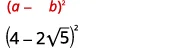
| Multiply, using the Product of Binomial Squares Pattern. | 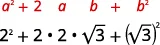 |
| Simplify. |  |
| Combine like terms. |  |
 |
|
| Multiply, using the Product of Binomial Squares Pattern. | 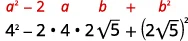 |
| Simplify. |  |
 |
|
| Combine like terms. |  |
 |
|
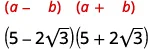
| Multiply, using the Product of Conjugates Pattern. | 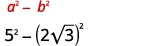 |
| Simplify. |  |
 |
Factoring the Greatest Common Factor of a Polynomial
Factoring the Greatest Common Factor
Factoring a Trinomial with Leading Coefficient 1
Factoring a Trinomial with Leading Coefficient 1
| Factors of | Sum of Factors |
| 14 | |
| 2 |
Factoring by Grouping
Factoring a Trinomial by Grouping
| Factors of | Sum of Factors |
| 29 | |
| 13 | |
| 7 |